Acoustic Treatment 101: Taming Your Room
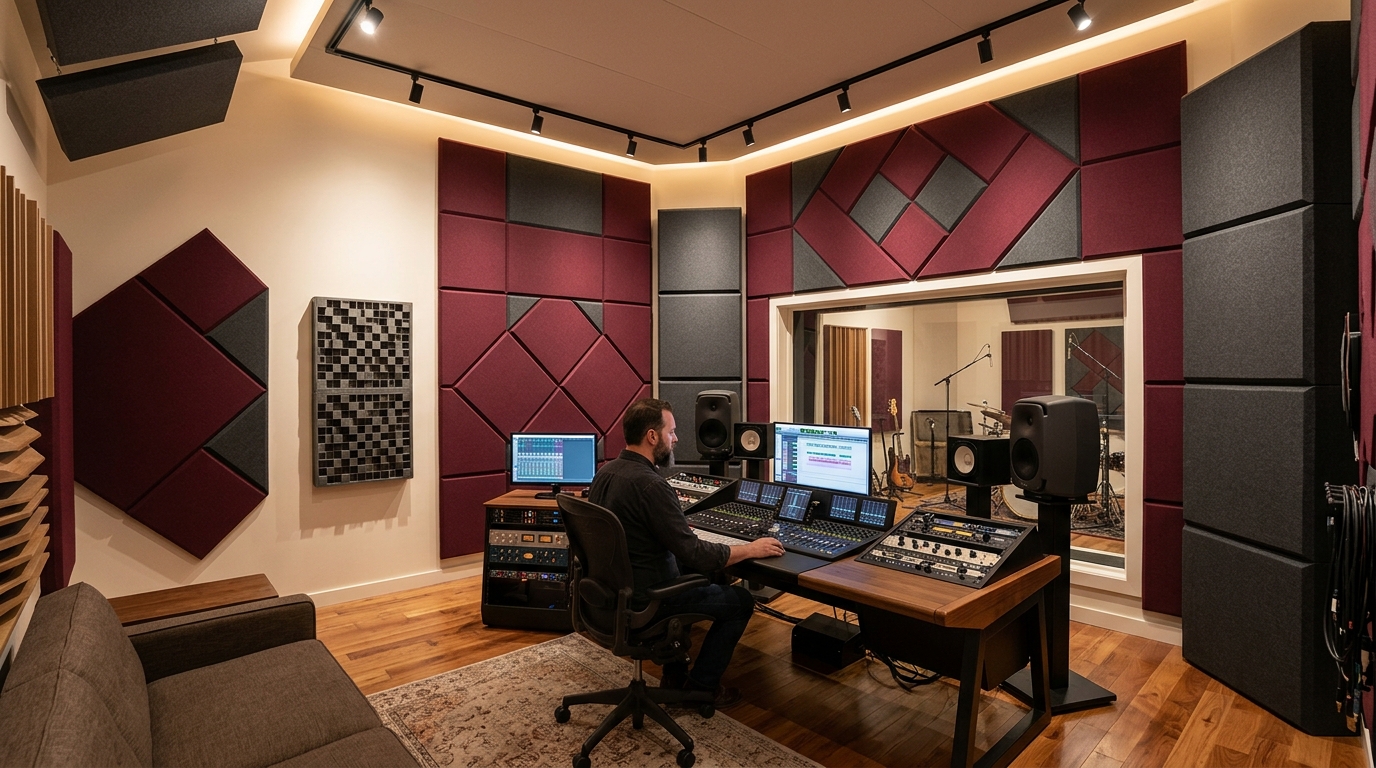
No matter how good your microphones and monitors are, your room shapes everything you hear and record. Untreated spaces introduce reflections, standing waves, and uneven bass that make mixing decisions unreliable. Acoustic treatment is the most cost-effective upgrade most home producers can make.
Absorption vs Diffusion
The two pillars of acoustic treatment serve different purposes. Absorption reduces reflections and controls excess energy, while diffusion scatters sound to keep a room lively without harsh echoes.
- Absorption panels tame mid and high frequencies and reduce flutter echo.
- Bass traps control the low-frequency buildup that gathers in corners.
- Diffusers preserve a natural sense of space in larger rooms.
Treat the First Reflection Points
The most important places to treat are the first reflection points — the spots on your side walls and ceiling where sound bounces directly from your monitors to your ears. Use the mirror trick: have someone slide a mirror along the wall while you sit in your mixing position, and mark every spot where you can see a speaker.
Do Not Forget the Corners
Bass energy accumulates in corners, causing boomy, inaccurate low end. Floor-to-ceiling bass traps in the corners behind and beside you deliver the biggest improvement in low-frequency accuracy.
Balance Is Key
Over-treating a room is a real risk. A completely dead space feels unnatural and tiring to work in. Aim for controlled reflections rather than total silence, keeping some liveliness in the room.
Conclusion
Good acoustic treatment transforms guesswork into confident decisions. You will hear your mixes clearly, and your recordings will need far less corrective processing. If you would like help designing treatment for your space, reach out to AleXavior Studios at 410-774-6092 for practical, room-specific advice.
Comments (0)
Leave a Comment
No comments yet. Be the first to comment!