DIY or Done-for-You? Choosing the Right Studio Website Path
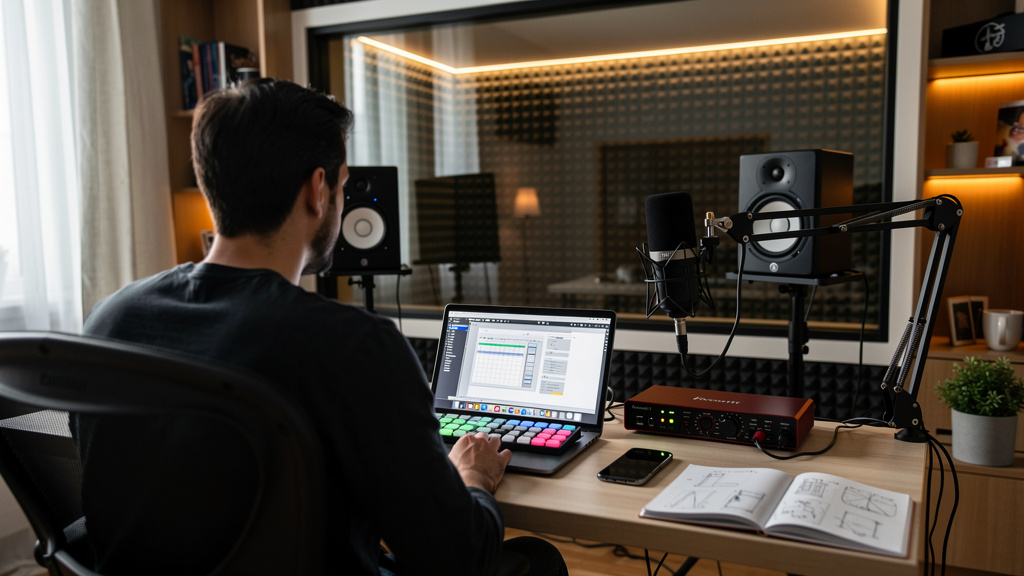
You know the feeling: the site is half-finished, the homepage still says “coming soon,” your inquiry form breaks on mobile, and every week you tell yourself you’ll fix it after the session, after the edit, after the mix revisions. Meanwhile, people are judging your business in about five seconds, and some of them are quietly moving on. For a studio or production business, that’s not a small branding issue. It’s lost trust before a conversation even starts.
The real question is not whether you can build your own site. Most people can get something online. The real question is whether DIY is the right use of your time, attention, and business energy right now. For some owners, building a website for a recording studio is a smart early-stage move. For others, it turns into a long, expensive detour that costs more in missed bookings than the site itself would have cost.
What DIY really costs a studio owner
DIY sounds cheap because the invoice is small at the start. What it often hides is decision fatigue. You are not just picking colors and uploading photos. You are deciding navigation, mobile layouts, inquiry flows, service packaging, copywriting, image prep, page structure, local search signals, booking logic, and what happens after someone fills out a form.
That matters because a professional website for a creative business is not just a digital flyer. It is part sales tool, part credibility signal, part admin assistant. If you build it yourself, you are taking on all three jobs.
Here is where DIY usually gets expensive:
- Time drift: a “weekend project” becomes six weeks of fragmented late-night work.
- Weak messaging: the site describes gear but never explains outcomes or who you serve best.
- Technical gaps: forms fail, mobile spacing breaks, page speed suffers, or images are oversized.
- No follow-up system: inquiries land in email with no tracking, reminders, or lead pipeline.
- Design inconsistency: the site feels homemade in a way that lowers trust for higher-value clients.
None of these are fatal on their own. Together, they quietly chip away at conversion. That is the difference between “I have a website” and “my website helps me get more studio bookings online.”
When DIY is the right call
There are good reasons to build your own site, especially if your business is new or changing quickly. DIY makes sense when speed of launch matters more than polish and when your first goal is simple visibility, not a fully automated client journey.
DIY is usually a solid choice if most of these are true:
- You are in the first year of business and still refining your offers.
- You have more time than cash.
- You are comfortable writing your own copy clearly.
- You only need a small site with a few focused pages.
- You can maintain it consistently after launch.
If that sounds like you, keep the scope tight. A simple site that is clear, fast, and current will beat a bigger, messier one every time.
For a lean DIY launch, build only what a prospect needs to say yes to the next step:
- Homepage: who you help, what you do, where you’re located, and the main action you want them to take.
- Services page: recording, mixing, production, podcast editing, voiceover, or whatever you actually sell.
- Portfolio page: a few strong examples, not a dumping ground.
- About page: your background, approach, room, and process.
- Contact or booking page: one clean form with only the fields you truly need.
That foundation is enough to start conversations. The mistake is trying to build an advanced appointment booking website, a lead nurture system, and a polished brand experience all at once if you are already stretched thin.
When a done-for-you website pays for itself
Once the business is active, the math changes. If you are already booking clients, every hour spent wrestling with layout bugs or plugin conflicts is an hour not spent on sessions, outreach, editing, or rest. At that stage, a done-for-you website is less about convenience and more about protecting revenue.
A professional build tends to pay off when one or more of these are happening:
- You are getting traffic or referrals, but the site is not converting well.
- You want a website with online booking instead of endless back-and-forth emails.
- You offer multiple services and need clearer sales paths.
- You want better local visibility without guessing at local SEO for studios.
- You are tired of manually tracking leads, follow-ups, and no-shows.
This is where real studio website design earns its keep. A strong done-for-you site is not just visually cleaner. It is strategically simpler for the visitor. It answers obvious questions fast, reduces hesitation, and moves the right people toward inquiry or booking.
If your business is established enough to value speed, consistency, and systems, it can make sense to work with a specialist in web design for studios and creative businesses rather than trying to become one yourself between sessions.
DIY website vs done-for-you website: compare the hidden variables
Price matters, but it is not the only variable. For studio owners, a better comparison is control versus distraction, and short-term savings versus long-term throughput.
DIY usually gives you:
- Lower upfront cost
- Full hands-on control
- Faster edits if you like managing things yourself
- A good learning experience if you enjoy web work
Done-for-you usually gives you:
- Stronger positioning and messaging
- More polished mobile experience
- Cleaner conversion paths
- Less operational drag
- Better integration opportunities, like a CRM and sales funnel website setup
That last point is bigger than many owners realize. When your site is tied to forms, automations, reminders, and follow-up sequences, the business feels less chaotic. A lead comes in, gets tracked, gets answered on time, and does not disappear because you were in a tracking session.
What a studio website actually needs to perform
Whether you build it yourself or hire a web designer for your studio, the same fundamentals apply. Good sites for audio businesses do a few practical things very well.
They should:
- State the offer quickly: not vague creative language, but clear services and next steps.
- Show proof: work samples, client outcomes, room photos, testimonials, or credits.
- Reduce friction: easy navigation, fast mobile load, clear contact options.
- Support booking: a direct path to inquire, schedule, or request a quote.
- Match your market: a songwriter demo room, podcast editor, mix engineer, and commercial studio should not all sound the same.
This is where many generic templates fall short. They can look acceptable, but they do not reflect how clients actually buy creative services. People are not only asking, “Is this person talented?” They are also asking, “Can I trust them? Do they understand my project? Is booking going to be a hassle?”
A website that wins work is not the one with the most pages. It is the one that removes the most doubt.
How to decide which path fits your business right now
If you are torn, use this quick decision process. It keeps the choice practical instead of emotional.
- Measure the backlog. If your current site has been “almost done” for more than 30 days, that is already a signal.
- Estimate missed opportunity. Ask what one decent booking is worth. Then ask how many you may be losing with a weak web presence.
- Assess your strengths honestly. Are you good at copy, structure, and visual hierarchy, or only willing to tolerate them?
- Define the business need. Basic brochure site? Or custom website design for small business growth with forms, automation, and stronger search visibility?
- Pick the path that frees you. The best choice is usually the one that gets a solid site live and maintained without draining your core work.
If you do go DIY, keep your first version intentionally small and ship it fast. If you go done-for-you, look for a partner who understands both service businesses and the way studio clients think. That combination matters more than trendy visuals.
Where done-for-you becomes more than design
Many studio owners think hiring help means buying prettier pages. The better reason is system design. A serious done-for-you website can support inquiry handling, qualification, appointment scheduling, follow-up, and re-engagement. That is a very different asset from a static online brochure.
For a busy owner, that can mean:
- fewer dead-end inquiries
- less inbox ping-pong
- clearer lead tracking
- better response consistency
- more time on billable work
That is why web design services for small business are most valuable when they connect the front-end experience to what happens after the form submission. The site should not stop working once someone presses send.
If your goal is a polished website for a recording studio that also handles booking flow, lead management, and follow-up with less manual work, a specialist partner like AleXavior Web Services is a smart next step to explore.
DIY is not wrong. Done-for-you is not automatically better. The right choice depends on your stage, your workload, and whether the website is just a presence tool or a working part of the business. If the site keeps slipping to the bottom of your list while opportunities keep coming in, that tells you something. At some point, building the business matters more than building the website yourself.
Comments (0)
Leave a Comment
No comments yet. Be the first to comment!