DIY vs Done-for-You Studio Website: What Actually Pays Off
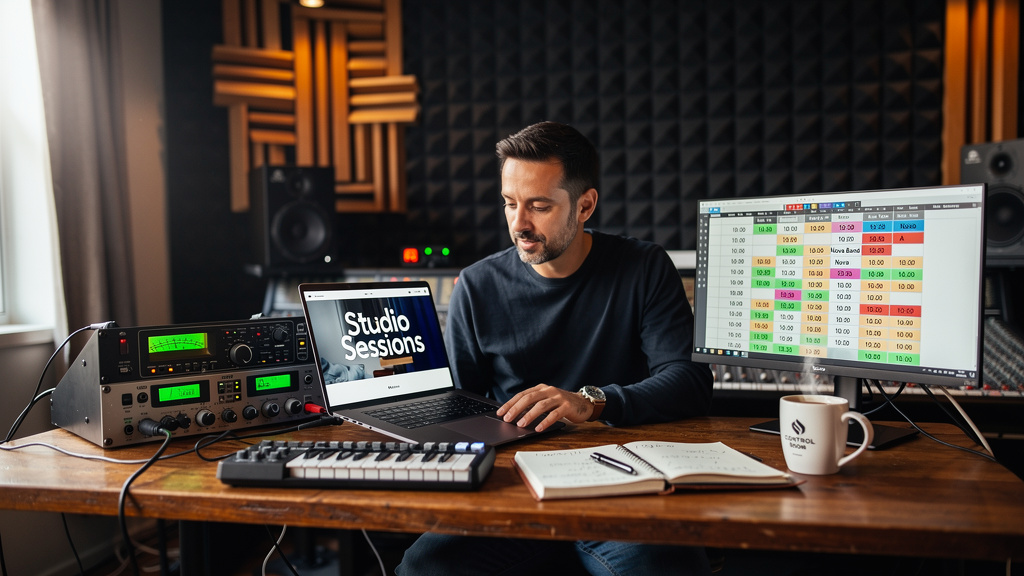
You know the pattern: a client asks for your website, and you feel that little stab of embarrassment because the homepage is half-finished, the portfolio is old, the contact form is flaky, and booking still happens through DMs, texts, and email chains. Meanwhile you’re trying to run sessions, answer inquiries, chase deposits, and keep the work moving. The website keeps getting pushed to “later,” but later has a way of costing real money.
For a studio or production business, a website is not just an online business card. It is part showroom, part trust signal, part filter, part booking assistant. The real question is not whether you can build it yourself. It’s whether DIY is the right use of your time, attention, and momentum at the stage your business is in.
There are absolutely cases where building your own site makes sense. There are also plenty of cases where a done-for-you website pays for itself because it removes technical drag and helps you get more studio bookings online without adding another job to your week. Let’s sort out the difference clearly.
What a website for a recording studio actually has to do
A lot of studio owners make the same mistake: they judge a site by how good it looks, not by how well it handles the path from curiosity to inquiry to paid booking. Good studio website design should do four jobs at once.
- Make the business feel credible fast. Visitors should understand who you serve, what you do, and why they can trust you within seconds.
- Answer practical questions. Rates, services, location, gear highlights, turnaround, booking process, and what a session is like should not be hard to find.
- Show proof. Audio samples, project credits, testimonials, room photos, and case-study style examples help people picture themselves working with you.
- Create a clean next step. A strong contact flow, an appointment booking website, or a website with online booking reduces friction when someone is ready.
If your website misses any of those jobs, you are probably creating hesitation right where a client should be gaining confidence. That is why this decision matters more than most people think.
When DIY is the right call
DIY makes sense when your business is early, your offer is still changing, and you’re comfortable learning just enough web tech to get a simple, solid site live. The big advantage is speed of ownership. You can change copy, swap photos, test offers, and update services without waiting on anyone else.
DIY is usually a good fit if most of these are true:
- You are in the first stage of building your client base.
- You only need a focused 3-5 page site.
- You can write clearly about your services and process.
- You have strong photos, decent branding, and a few testimonials or work samples.
- You are disciplined enough to finish the project, not just start it.
The problem is not that DIY sites are automatically bad. The problem is unfinished DIY sites, confused messaging, weak mobile layouts, and broken follow-up. A basic website can absolutely work if it is clean, direct, and current.
If you go the DIY route, keep the first version narrow. Do not try to build a massive portal. Build the minimum site that helps a stranger trust you and contact you.
- Start with the pages that move money. Home, services, portfolio, about, and contact are enough for many studios.
- Write for the client’s questions. What can they book? What kind of projects do you handle? What does it cost? How do they start?
- Use real visuals. Your actual room, actual rig, actual sessions, actual clients where permitted. Stock imagery weakens trust fast.
- Make inquiry friction low. Include a short contact form and, if your workflow supports it, a simple booking request path.
- Check the mobile experience obsessively. Most people will first see your site on a phone.
- Set up basic local SEO for studios. Clear service pages, your city or service area, consistent business details, and readable page titles help people find you.
A lean DIY site can do real work. But only if it gets published, maintained, and tied to your actual sales process.
Where DIY usually starts leaking time and bookings
The hidden cost of DIY is not the template fee. It’s the hours spent troubleshooting forms, rewriting awkward copy, resizing images, patching plugins, figuring out why the booking calendar won’t sync, and trying to connect everything after midnight when you should be resting for tomorrow’s session.
Studio owners often underestimate how many moving parts a professional website for a creative business really includes:
- Messaging that speaks to the right client type
- Page structure that guides action
- Mobile performance
- Inquiry forms that actually route leads properly
- Calendar or booking workflows
- CRM follow-up
- Email automation for new inquiries
- Search visibility for local services
- Analytics so you know what is working
This is the point where a “website project” quietly turns into operations design. If your business depends on regular inquiries, repeat bookings, project deposits, and follow-up, then your site is not just a design problem. It is a sales system problem.
That is also why many studio owners eventually decide to work with specialists in web design services for small business who understand booking-based creative businesses instead of trying to duct-tape the whole thing together themselves.
When a done-for-you website is the smarter business move
A done-for-you website makes the most sense when you already know your services, you have enough client flow that missed inquiries hurt, and your time is better spent engineering, producing, editing, or selling than fighting with web tools.
Here’s the practical test: if one or two additional bookings per month would cover a professional build, the decision becomes less emotional and more operational.
Done-for-you is often the better move when:
- Your current site looks dated or incomplete.
- You rely on referrals but want more predictable inbound leads.
- You need a website with online booking, deposits, or consult scheduling.
- You want a CRM and sales funnel website instead of a static brochure.
- You serve higher-value clients who expect polish and clarity before they reach out.
- You keep postponing the site because client work always wins.
The right partner should not just make things prettier. They should help shape the offer, tighten the copy, simplify the booking path, and build the backend so inquiries do not disappear into your inbox.
What to expect from professional studio website design
If you decide to hire a web designer for your studio, you should expect more than layout work. A proper build should support the way your business actually runs.
At a minimum, a strong custom website design for small business in this space should include:
- Clear positioning. Not “we do audio,” but who you serve and what outcomes you help create.
- Service architecture. Separate pages or sections for recording, mixing, production, podcast work, voiceover, mastering, or rehearsal if those are distinct offers.
- Proof assets. Embedded samples, credits, testimonials, before-and-after context, room imagery, and process details.
- Lead capture. Forms designed around real inquiry types, not a generic “message us” box.
- Booking flow. A website with online booking or request scheduling that matches how you qualify leads.
- Follow-up systems. CRM tagging, autoresponders, and reminder sequences so prospects do not go cold.
- Local search visibility. Smart page structure and location relevance that help nearby clients find you.
That last point matters more than many studio owners realize. Good design gets attention. Good structure gets found. You need both.
How to choose between DIY and done-for-you honestly
If you are on the fence, use this simple framework. Ask yourself these questions in order:
- Do I know exactly what I’m selling? If not, DIY may be a good short-term lab while you clarify your offer.
- Do I have the time to finish and maintain this? If the answer is no, be realistic. An unfinished website is worse than a simple one.
- What is one missed booking worth? Put a number on it. That usually clears the fog.
- Do I need automation? If you want forms, pipelines, email follow-up, and a website with online booking, complexity rises quickly.
- Am I trying to save cash or avoid making a decision? Those are not the same thing.
There is no virtue in doing everything yourself if it keeps you stuck. There is also no shame in starting simple if that gets you moving now.
The best website is not the one you built alone. It’s the one that makes the next good client feel ready to contact you.
A practical middle ground that works for many studios
For some businesses, the smartest path is phased. Start with a tight DIY version if you are early and cash-conscious. Learn what clients respond to. Notice which services get the best inquiries. Then, when demand and clarity improve, move to a true done-for-you website that adds stronger positioning, automation, and conversion structure.
That approach keeps you from overspending too early while still treating the website as a serious business asset later. It also gives your designer better material to work with because you’ll have real data, client language, and a clearer offer.
If you are already at the point where the site needs to function as more than a digital flyer, it may be time to bring in a done-for-you website partner for your studio who can build the front-end and the booking systems together. That is often the difference between a site that merely exists and one that consistently supports revenue.
The real choice is not DIY versus professional pride. It’s whether your website is helping your business breathe easier or quietly creating more drag. If you can build a clean, current, useful site and keep it maintained, DIY can be smart. If the website has become another unfinished cable pile in the corner of the room, done-for-you may be the more economical choice after all.
Comments (0)
Leave a Comment
No comments yet. Be the first to comment!