DIY vs Done-for-You: Which Studio Website Path Pays Off?
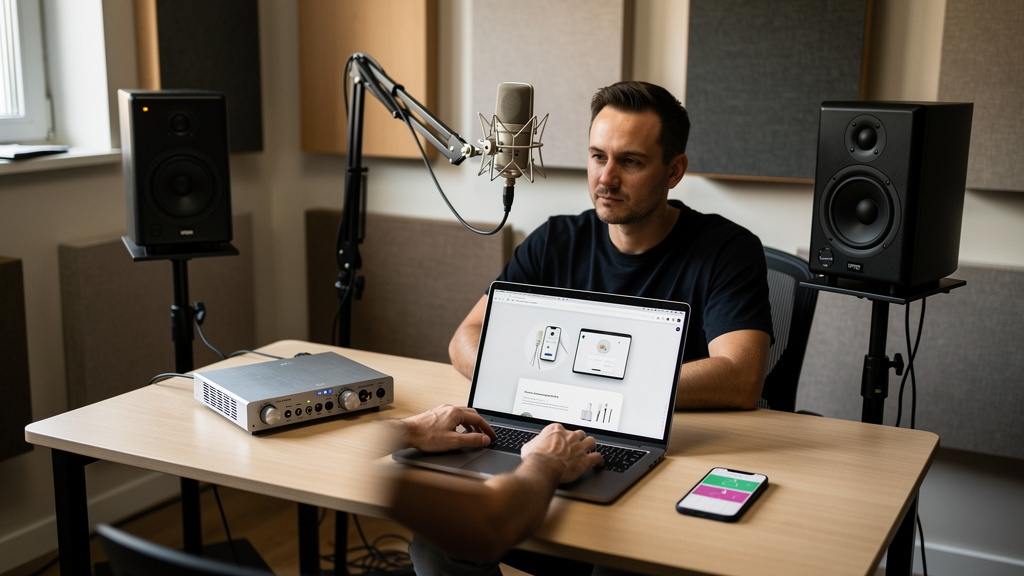
You know the feeling: the studio sounds tight, the work is solid, referrals are warm, and then a potential client lands on your website and the whole thing suddenly feels smaller than your business really is. Half-finished pages. No clear way to book. Mobile layout breaking in odd places. You meant to fix it after that last mix revision, then after the podcast launch, then after the weekend session. Now the site has become one more nagging piece of background noise.
That is the real DIY vs done-for-you question. It is not just “Can I build a website?” Most studio owners can. The real question is whether building and maintaining it yourself is the best use of your time, attention, and problem-solving energy when your business already depends on staying creative, responsive, and technically sharp.
If you run a recording studio, production company, editing room, or content business, your website is not a digital business card. It is a filter, a sales conversation, a trust signal, and often the first test of how organized you are to work with. A strong website for a recording studio should answer practical client questions fast: what you do, who you help, what it costs or how quoting works, where you are, what the process feels like, and what the next step is.
What DIY really costs a studio owner
DIY makes sense for a lot of people at the start. Cash is tight. You are capable. Website builders are better than they used to be. If your needs are simple, building your own site can absolutely get you online.
But there are hidden costs that hit creative businesses harder than they hit a generic local service company. Studio owners do not just need pages. They need positioning. They need audio-aware messaging, clear service structure, polished media presentation, and a path that helps the right clients commit without a long back-and-forth thread.
When you build it yourself, you are usually taking on all of this:
- Writing the copy
- Choosing the structure
- Designing for desktop and mobile
- Setting up inquiry or booking forms
- Connecting email follow-up
- Handling basic SEO and local search signals
- Updating plugins, security, and content over time
None of those tasks are impossible. The issue is context-switching. You start the day trying to finish drum edits and end it resizing hero images, troubleshooting forms, and wondering why your service page is not ranking. That mental split has a cost. It slows the website down, and it often slows your billable work down too.
A DIY site can also stay “nearly finished” for months. That is where most lost revenue happens. Not because the site is ugly, but because it leaves friction in the buying process.
When DIY is the right move
There are cases where building your own studio website is still the smart play. If you are early-stage, your offer is still changing, or you have more time than budget, DIY can help you learn what clients respond to before you invest in a bigger build.
DIY usually works best if these are true:
- You only need a lean site with 3-5 pages
- Your services are easy to explain
- You are comfortable writing and organizing information clearly
- You can maintain the site monthly, not just launch it
- You do not need advanced automation yet
If that is you, keep the build simple. Do not try to imitate a large agency site or cram every possible service into the navigation. A smaller, cleaner site beats a sprawling unfinished one every time.
For most owners, the best DIY version is not “build everything.” It is “build the minimum site that clearly sells one core offer.” That might be tracking and mixing, podcast production, voiceover recording, or music production for artists in your city.
A practical DIY build order
If you decide to do it yourself, follow a sequence that keeps the project useful instead of endless.
- Define the main conversion goal. Do you want inquiries, direct bookings, consult calls, or quote requests? If you do not decide this first, every page gets vague.
- Map the five pages that matter. Home, services, about, portfolio or samples, and contact or booking. That is enough for many studios.
- Write copy before design tweaks. Clear words close more business than fancy layouts. Say who you help, what problem you solve, and what working with you is like.
- Build mobile-first. A lot of prospects will visit your site from Instagram, search, or a text referral on their phone.
- Add one strong call to action. If every page asks people to do three different things, many will do nothing.
- Set up basic tracking. Know which pages people visit, where inquiries come from, and which services draw interest.
- Review it like a client. Can someone new understand your offer in 10 seconds and take the next step in under a minute?
That order matters because design is where most DIY projects drift. Owners spend six hours picking fonts and fifteen minutes clarifying what the business actually sells.
Where done-for-you pulls ahead
A done-for-you website starts making sense when your site needs to do more than sit there and look presentable. Once your website has to support bookings, lead follow-up, local search visibility, and client management, the stakes change.
This is especially true if you want a website with online booking or an intake flow that pre-qualifies leads. Suddenly you are not just arranging pages. You are building a system.
A professional team can usually solve four problems faster than a busy owner can solve one:
- They structure the site around conversion, not just appearance
- They build stronger mobile usability from the start
- They connect forms, calendars, and automation correctly
- They write and design with trust-building in mind
That last point matters more for studios than people think. Clients are hiring you with both money and vulnerable creative work. Good studio website design lowers anxiety. It makes the process feel clear before the first email ever happens.
If you are at the point where leads are inconsistent, inquiries are messy, or your current site feels like it is holding back the business, bringing in a specialist studio web partner can save a surprising amount of time and lost momentum.
How to decide: build it yourself or hire a web designer for your studio?
Here is the simplest way to decide: compare the website project against your highest-value work.
If two days of client work pays more than the time you will realistically spend planning, writing, building, editing, testing, and maintaining the site, DIY may not be cheaper at all.
Ask yourself these questions:
- Am I good at finishing web projects, not just starting them?
- Do I know what my client journey should look like from first visit to booked session?
- Can I write copy that speaks to real buyer concerns?
- Will I maintain this site quarterly?
- Am I losing leads right now because the current site feels thin, dated, or confusing?
If you answered no to several of those, it may be time to hire a web designer for your studio rather than keep patching the problem between sessions.
What a professional website for a creative business should actually do
A lot of owners think the upgrade is visual. Better photos, cleaner typography, nicer colors. That helps, but the real upgrade is functional clarity.
A professional website for a creative business should help a prospect move from curiosity to action with very little friction. For studio businesses, that usually means:
- A clear explanation of services and who they are for
- Audio, video, or portfolio samples presented without clutter
- Fast-loading mobile pages
- Easy inquiry or appointment flow
- Proof of trust, such as testimonials, credits, or process transparency
- Basic local SEO for studios so nearby clients can find you
- Follow-up systems that stop leads from going cold
This is where many owners outgrow a simple brochure site. They need an appointment booking website or even a CRM and sales funnel website that tracks inquiries, automates replies, and keeps prospects moving without manual chasing.
That does not mean every studio needs a giant custom build. It means the website should match the maturity of the business. A side-hustle mix engineer and a full-service production company should not be solving the same website problem in the same way.
The middle ground most owners miss
There is also a hybrid path. You can do the early thinking yourself and hand off the technical and strategic build. That often works well if you know your services well but do not want to lose a week wrestling with design, forms, automation, and mobile polish.
Before you reach out for help, gather these:
- Your core services in plain language
- Your ideal client types
- Your most common pre-booking questions
- Any testimonials, credits, or sample work
- Your preferred next step for leads
That prep makes any build better, whether you are doing it yourself or using web design services for small business. Good websites are rarely about magic. They are usually the result of sharp positioning and clean execution.
Choose the path that protects your momentum
The best choice is not the one that sounds the most independent. It is the one that gets a working, credible, conversion-focused site live without draining the energy you need for your actual craft.
If building your own site feels energizing and manageable, keep it focused and launch faster than you think you should. If the project keeps sliding behind client work, that is useful information too. It probably means your business has reached the point where professional help will pay for itself in saved time and cleaner lead flow.
And if you want a team that understands both the creative side and the business mechanics of custom website design for small business, AleXavior offers done-for-you websites for studios and production companies with booking, CRM, and lead follow-up built in to help you get more studio bookings online without becoming your own web department.
Comments (0)
Leave a Comment
No comments yet. Be the first to comment!