DIY vs Done-for-You: Which Studio Website Pays Off?
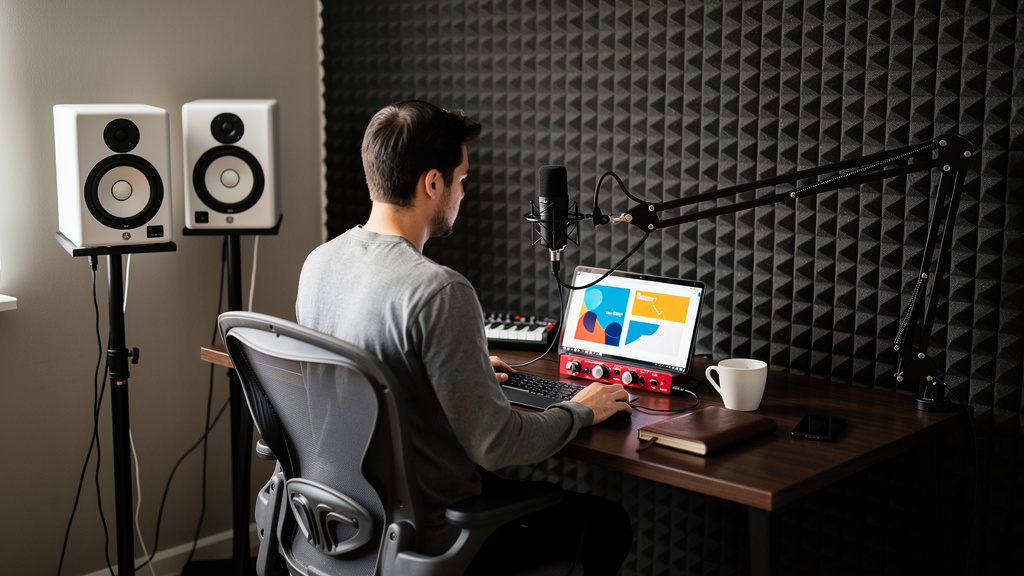
You know the pattern: the site is half-finished, the homepage still says “coming soon,” your contact form dumps leads into a personal inbox, and every time a potential client asks for rates or booking, you end up handling it through scattered DMs and late-night email replies. Meanwhile, the work you actually want to be doing is recording, editing, mixing, producing. The website keeps hanging over your head like an unfinished track.
For a studio or production business, the website question is not really about aesthetics first. It is about time, trust and whether your online presence helps people book you or quietly leaks work. That is why the real decision is not “Can I build a site?” It is “Should I build this myself, or is a done-for-you website the better business move right now?”
What a website for a recording studio actually has to do
A studio website has a harder job than a simple online brochure. It has to make strangers trust your ears, your room, your process and your professionalism without meeting you first. That is a tall order.
A strong website for a recording studio needs to answer a few questions fast:
- What do you do, exactly?
- Who do you serve?
- What does working with you feel like?
- How do people hear your work?
- How do they book or contact you without friction?
If you are a podcaster-friendly room, that should be obvious in seconds. If you specialize in vocal production, mixing, ADR, beat production or live band tracking, that should be obvious too. A lot of studio owners build sites around themselves instead of around the client’s decision-making process. That is where many DIY builds start to wobble.
The site does not need to be huge. It does need clear positioning, audio examples, strong service pages, fast mobile performance and a booking path that does not make people work for it.
When DIY makes sense for studio website design
DIY is not automatically a bad choice. In some cases, it is exactly the right one. If cash is tight but you have some technical patience, building your own site can be a practical short-term solution.
DIY tends to work best when these conditions are true:
- You are early-stage and need a simple online presence more than a full client-acquisition system.
- You can write clearly about your services without sounding vague or generic.
- You have enough visual taste to keep the design clean and restrained.
- You can maintain the site consistently after launch.
- Your offer is straightforward enough that a basic contact form is acceptable for now.
If that sounds like you, building your own site can teach you a lot. You will get clearer on your positioning, your pricing communication and what clients actually ask before they book. That knowledge is useful even if you later bring in a studio web design specialist.
But DIY only pays off when you treat it like a defined project instead of a lingering side quest. The problem is not that owners cannot build decent sites. The problem is that most creative business owners do not finish them properly, or they finish them at a standard that still leaves money on the table.
A practical DIY standard to aim for
If you are going to do it yourself, keep the first version focused. Build these pages before anything else:
- Home: clear statement of who you help, what you offer and what the next step is.
- Services: individual sections or pages for recording, mixing, podcast production, production, mastering prep or whatever you actually sell.
- Portfolio: audio samples, embedded work, or case-style examples with context.
- About: your room, your experience, your process and why clients trust you.
- Contact or booking: one obvious path to start the conversation or reserve time.
That structure is enough to launch something usable. Where DIY often falls apart is in the details that drive business results: messaging, page hierarchy, mobile layout, search visibility, load speed, inquiry flow and follow-up automation.
Where DIY usually starts costing more than it saves
The hidden cost of DIY is not only your time building pages. It is the time spent making dozens of tiny decisions outside your real expertise. Font choices. page spacing. form behavior. mobile breakpoints. image sizing. SEO structure. booking logic. confirmation emails. lead capture. follow-up.
Individually, none of that feels impossible. Together, it can eat weeks.
For a studio owner, those weeks have a real price. They can mean delayed launches, missed inquiries, weak first impressions and less time spent doing paid work. If one decent project or recurring client would cover the cost of professional help, the math changes quickly.
Here is where many owners get stuck: they compare a DIY build to the invoice for hiring help, but they do not compare it to the value of their own booked hours. If you spend 40 to 60 hours wrestling a site into existence, that is not free.
A weak DIY site also creates softer costs:
- Leads who bounce because the offer feels unclear
- Prospects who never hear back because inquiries are disorganized
- Referrals who lose confidence when the site looks neglected
- Poor local search visibility when local SEO for studios was never set up properly
This is why some studio owners do not just need a website. They need a business tool.
When a done-for-you website is the smarter move
A done-for-you website makes sense when your website needs to function like part of your front desk, sales process and client intake system, not just an online flyer.
You are probably ready for professional help if any of this sounds familiar:
- You already get inquiries, but too many go cold before booking.
- You are tired of manually answering the same questions.
- You want a website with online booking instead of back-and-forth scheduling.
- You need cleaner lead management and follow-up.
- You want the site to reflect the quality of your room and work.
- You need a professional website for a creative business that supports growth instead of patchwork fixes.
At that point, hiring the right team is not vanity spending. It is operational cleanup.
Good web design services for small business should do more than make pages look polished. They should build the client journey: discovery, trust, inquiry, follow-up and booking. For studios, that can include service-specific landing pages, better search structure, embedded samples, intake forms that filter bad-fit leads and an appointment booking website flow that saves hours every month.
What to expect from custom website design for small business
If you decide to hire out, you want more than a generic template with your photos dropped in. Studios have unusual needs. Your business runs on credibility, creative fit and workflow clarity.
A real custom website design for small business in this niche should cover these basics:
- Messaging tailored to your exact services and clients
- Clean audio or media presentation without clutter
- Mobile-first layout that works when clients check you from their phones
- Fast load times and simple navigation
- Lead forms that ask useful pre-qualification questions
- Booking or consultation flow matched to how you actually sell
- Search-friendly page structure for your city, services and niche
- Follow-up systems that stop leads from falling through the cracks
This is where a CRM and sales funnel website can become genuinely useful for a studio. Not because “funnels” are trendy, but because many owners are still running serious businesses through inbox chaos. If someone asks about rates, availability, revision policy or session prep, the site and automation can do part of that work for you before you ever reply.
That is also how you get more studio bookings online without becoming pushy. The site simply removes friction and gives people confidence to move forward.
How to decide: a simple business test
If you are on the fence, use this framework instead of guessing.
- Estimate your true DIY hours. Include writing, design, revisions, setup, forms, mobile cleanup and launch.
- Put a value on those hours. Use your realistic billable or owner-hour rate.
- List the business features you actually need. Basic brochure? Or online booking, lead capture, automation and local search visibility?
- Audit your current inquiry flow. Count how many leads arrive, how many book and where people disappear.
- Decide based on bottlenecks, not pride. If tech work keeps delaying revenue work, that is your answer.
For some owners, DIY is the right bridge. For others, it is a false economy that keeps the business looking smaller than it really is.
The key is honesty. If you enjoy building systems and can finish the job well, great. If you mainly want the site done right so you can get back to sessions, that matters too.
If you hire a web designer for your studio, ask these questions
Not every designer understands creative-service businesses, and fewer still understand studios. Before you hire a web designer for your studio, ask direct questions:
- How will the site help qualify and convert leads, not just look good?
- How will audio, portfolio or session examples be handled?
- Can the site support online scheduling or consultation requests?
- Will the structure support local search for my city and services?
- What happens after launch if I need edits, campaigns or new pages?
Those questions move the conversation away from surface design and toward business performance, which is where it belongs.
If you would rather skip the trial-and-error and have a site built around bookings, follow-up and growth, AleXavior offers done-for-you websites for studios and creative businesses with online booking, CRM workflows, email automation and sales funnels built in. That is a strong next step for owners who want the website to pull its weight without becoming another technical project on the bench.
Comments (0)
Leave a Comment
No comments yet. Be the first to comment!