DIY vs Done-for-You: Which Studio Website Route Pays Off?
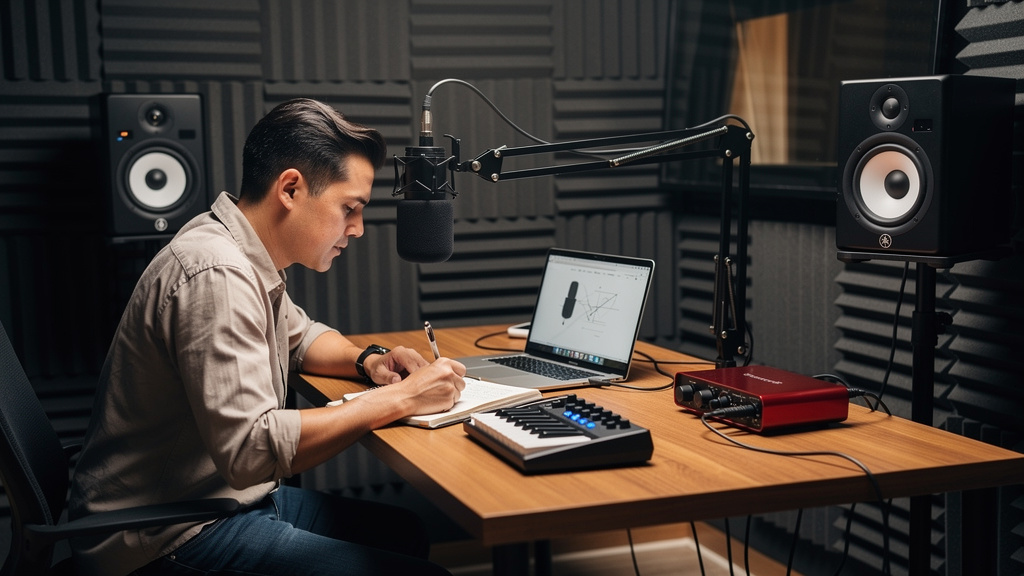
You know the feeling: the mics are set, the room sounds right, the work is good, and yet your website still feels like the weakest link in the business. It sits half-finished, loads a little too slowly, hides your best work behind awkward menus, and quietly costs you inquiries while you are busy doing actual client work. That is the real pain here. Most studio owners are not deciding between “easy” and “hard.” They are deciding whether to spend scarce time learning web systems or protect that time for recording, editing, mixing, and client relationships.
There is no moral victory in building every part of your own business stack. A website for a recording studio is not a side hobby if it is supposed to bring in paying work. It is part storefront, part trust signal, part assistant. The question is not whether you can build it yourself. The question is whether DIY is the best use of your time, attention, and momentum right now.
What your studio website is actually supposed to do
Before comparing DIY and done-for-you, get clear on the job. A studio site is not just an online brochure. It should help a stranger decide three things fast: are you good, are you credible, and what happens next if they want to work with you?
That means your site needs to do a few practical things well:
- Explain your services in plain language
- Show relevant work without making visitors hunt for it
- Answer common objections about rates, process, turnaround, location, and gear
- Capture leads through contact forms or a website with online booking
- Work cleanly on phones, where many first visits happen
- Show up for local searches if you rely on nearby clients
If your site misses those basics, the problem is not just design taste. It is signal flow. Good studio website design moves a visitor from curiosity to trust to action with as little friction as possible.
When DIY makes sense for a professional website for a creative business
DIY is not automatically a bad decision. In some cases it is exactly right. If you are early in the business, your service list is still changing, and your budget is genuinely tight, building your own site can help you get something live and learn what clients respond to.
DIY usually makes sense when these are true:
- You only need a lean site with a few pages
- You are comfortable writing copy and choosing visuals
- You can troubleshoot basic platform issues without spiraling for hours
- You do not need advanced automation yet
- Your brand positioning is still evolving
That last point matters more than people think. If you are still figuring out whether you want to focus on podcast production, vocal tracking, mixing, or full-service production, a simple DIY site can function like a sketchpad. It lets you test offers before investing in a more dialed-in build.
But DIY only works if you keep the scope under control. The moment you start saying, “I also want a custom intake form, automated follow-up, lead tracking, booking flows, and better local search visibility,” you are no longer talking about a weekend project.
The hidden cost of DIY is not money. It is drag.
Studio owners often compare DIY software costs with agency pricing and stop there. That misses the real expense. The biggest cost is drag: the hours spent on templates, page structure, mobile fixes, image sizing, forms, integrations, spam handling, calendar logic, and copy decisions you are not really equipped to make at speed.
Here is what that drag often looks like in practice:
- You start with a template that looks decent in demo form.
- You try to adapt it to your studio and realize the layout assumes a totally different business.
- You spend nights rewriting sections, swapping blocks, and chasing spacing issues.
- You publish something “good enough” just to get it over the line.
- Months later, it still does not bring steady inquiries, and now updating it feels even heavier.
None of that means you failed. It means web work has its own craft, just like recording does. A clean vocal chain is simple only if you already know what matters. The same is true for websites.
What done-for-you really buys you
A done-for-you website is not just paying someone to arrange text and photos. Done well, it buys strategy, structure, and a system that supports bookings without constant babysitting. That is a very different thing from “having a nicer site.”
If your business depends on regular inbound inquiries, done-for-you starts to make sense when you need:
- Clear positioning for a specific kind of client
- Custom website design for small business goals, not generic templates
- An appointment booking website tied to your actual workflow
- Lead capture and follow-up built into a CRM and sales funnel website
- Local SEO for studios that want to rank in their city or region
- A site that reflects the level of professionalism clients should expect from your sessions
This is where owners often feel the difference. Instead of “I have a website,” the result becomes “I have a system that helps me get more studio bookings online.” Those are not the same thing.
And yes, this is the point where it can help to bring in a studio-focused web partner that already understands booking flows, creative portfolios, and lead nurturing for service businesses like yours.
How to decide: a practical filter
If you are stuck between doing it yourself and hiring help, use a simple decision filter. Score yourself honestly on these five areas:
- Time: Can you give this focused hours every week for the next month without hurting paid work?
- Clarity: Do you know exactly who the site is for and what you want them to do?
- Copy: Can you write persuasive service pages without sounding vague or generic?
- Systems: Do you need booking, automations, lead tracking, or email follow-up?
- Standards: Will a rough first version hurt your positioning more than help it?
If your answers are weak on three or more of those, DIY will probably cost more than it saves. Not because you are incapable, but because the business already needs a stronger foundation than a spare-time build usually delivers.
Studio website design that earns its keep
Whether you build it yourself or hire a web designer for your studio, a few principles matter more than trends.
Lead with the client outcome
Most studio sites talk too much about the owner and not enough about the client’s problem. A podcaster wants clean, reliable production. A band wants a room and engineer they can trust. A voice actor wants fast turnaround and consistency. Speak to that first.
Make next steps obvious
If somebody likes your work, do not make them decode your process. Every service page should point toward one next action: inquire, schedule, request a quote, or book a call.
Show proof, not just claims
Client results, short testimonials, before-and-after context, session photos, and credits matter. They reduce risk. They let visitors picture themselves working with you.
Keep the path short on mobile
A surprising number of studio sites still feel awkward on phones. Too much text, oversized image banners, hidden buttons, or tiny contact forms all create drop-off. If someone cannot contact you from their phone in under a minute, the site is underperforming.
Build around your real workflow
If you pre-qualify leads before booking, your forms should reflect that. If you offer discovery calls before larger projects, your site should guide people there. If you book recurring podcast clients, the process should support repeat scheduling. Good web design services for small business are less about decoration and more about operational fit.
What to prepare before you hire anyone
If you decide you want a done-for-you website, a little preparation saves time and improves the result. Gather these first:
- Your core services and who each one is for
- Examples of work you want to highlight
- Any testimonials, credits, or client outcomes
- Your preferred inquiry and booking process
- Photos of your room, setup, and sessions
- A rough list of common client questions
This material gives a designer the raw tracks. Without it, even a strong builder is mixing around missing parts.
DIY now, done-for-you later is a valid strategy
There is no rule saying you must choose one path forever. A lean DIY launch can be smart if it gets you online fast and teaches you what services convert. Later, when your positioning is tighter and the business is steadier, a done-for-you website can rebuild that foundation properly and add the pieces that save you time: booking, CRM, automated follow-up, stronger service pages, and local search structure.
The key is honesty. If DIY is helping you move, keep moving. If it has turned into a half-maintained side project that quietly weakens your brand, it is time to stop treating it like a badge of independence.
Your website should sound like your best session days feel: clear, calm, intentional, and easy to trust. If you would rather stay focused on running sessions than wrestling with templates, forms, and automation, it may be worth talking to AleXavior’s done-for-you website team about a build that fits the way your studio actually works.
Comments (0)
Leave a Comment
No comments yet. Be the first to comment!