How to Structure a Studio Website for Local SEO
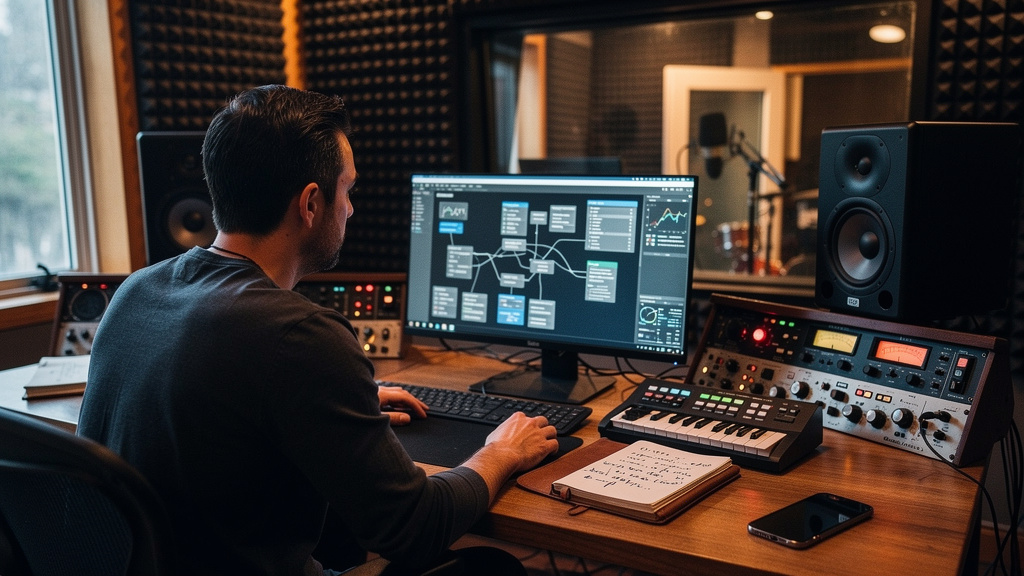
You know the feeling: your room sounds great, your work is solid, clients are happy, and yet when someone nearby searches for a studio, your business is buried under directories, general music schools, and competitors with weaker portfolios. That disconnect is brutal. Local clients are ready to book, but your site is sending mixed signals to search engines and making it harder than it should be for the right people to find you.
The good news is that local SEO for studios is usually less about tricks and more about structure. A recording studio website that is organized around real services, real locations, and clear booking paths gives Google far better context. It also gives humans a cleaner path from “I need a place to record” to “I’m reaching out today.”
If you run a studio, produce podcasts, track voiceover, mix records, or offer rehearsal and content creation services, your website should be built like a well-routed signal chain: every page has a job, every link points somewhere intentional, and nothing important is buried three layers deep.
Start with one clear site architecture for local SEO for studios
The biggest mistake is trying to say everything on one page. A homepage that mentions recording, mixing, mastering, podcasts, video shoots, beat production, rehearsal space, lessons, and event rentals all at once usually ranks poorly because it lacks a strong local focus. Search engines need a clean hierarchy.
For most studios, the best structure is simple:
- Homepage focused on your main offer and primary city.
- Service pages for each core revenue stream.
- Location pages only when they are real and useful.
- Portfolio or samples that support trust.
- About page that proves you are a real local business.
- Contact or booking page built to convert.
That structure works because each page answers a different search intent. Someone searching “recording studio in Nashville” needs a different page than someone searching “podcast studio rental near me” or “mixing engineer in Brooklyn.” If all of that lives on one page, you weaken the relevance of each topic.
Think of your homepage as the hub, not the whole building. It should target your main local term and then pass authority into tightly focused service pages.
What your homepage should actually do
Your homepage is often the strongest page on your domain, so give it one clear job: tell both people and search engines what you do, where you do it, and why someone should trust you.
A strong homepage for a website for a recording studio should include:
- Your primary service and city in the main headline or early copy.
- A short intro explaining who you serve: artists, podcasters, voiceover clients, labels, agencies, or content creators.
- A concise list of core services with links to dedicated pages.
- Real photos of the studio, not generic stock images.
- Social proof such as testimonials, credits, or notable sessions.
- A direct path to contact, consultation, or a website with online booking.
Don’t try to rank the homepage for every town within two hours of your studio. Pick the primary location you actually serve from, then support neighboring areas more strategically through service content, local references, and only a few legitimate location pages if they truly make sense.
Build one page per service, not one page per vague idea
This is where many studio sites fall apart. You may have a navigation tab called “Services,” but if it opens one generic page with a short paragraph about everything, you are missing your best local SEO opportunity.
Instead, create dedicated pages for the services people search for individually. That might include:
- Recording studio rental
- Podcast recording
- Mixing
- Mastering
- Voiceover recording
- Producer or engineer hire
- Rehearsal space
Each page should explain the service in practical terms, name the city or area naturally, answer common objections, and show the next step. Good studio website design treats every service page like a landing page with local relevance.
For example, a podcast recording page can mention local businesses, coaches, or creators who need clean audio without building a full home setup. A voiceover page can speak to agencies, course creators, and local brands. That kind of specificity helps rankings because the page is genuinely useful, not thin filler.
If you are planning a done-for-you studio website, this service-page structure is one of the first things worth getting right. It affects SEO, user flow, and your ability to get more studio bookings online.
Use location pages carefully or they can hurt you
Location pages can help, but only when they are real. If your studio is in one city and you publish 25 near-identical pages targeting every suburb in the region, you usually create weak content that competes with itself.
Create a location page only if one of these is true:
- You have a physical presence there.
- You regularly serve clients from that area and can speak to it specifically.
- You offer mobile or on-site services there.
- There is enough unique demand to justify a useful page.
When you do make a location page, write it like a local page, not a copy-paste SEO page. Mention how far the area is from your studio, the kinds of clients you commonly serve there, parking or transit notes, and which services are most requested. Local relevance comes from details.
A solid location page might target “podcast studio serving North Austin” or “recording studio near Jersey City,” but only if the page contains original information and leads naturally to contact or booking.
Internal linking should feel like smart routing
Your page structure only works if the pages actually support each other. Internal links help search engines understand relationships between topics, but more importantly, they keep visitors moving instead of bouncing.
Here’s a practical way to wire the site:
- Link from the homepage to each core service page.
- Link from each service page back to the homepage and contact page.
- Cross-link closely related services, like recording to mixing, or podcast production to voiceover.
- Link portfolio pieces to relevant service pages.
- Link all local pages to the most relevant service page, not just the homepage.
This matters because a site that is easy to crawl is usually easier to use. And a site that is easy to use tends to convert better. Search visibility and bookings are not separate problems.
Give every important page a conversion path
Too many studio owners treat SEO and sales as different tasks. They are the same chain. If someone lands on a well-ranked page and has no easy next step, that traffic has limited value.
Every major page should include one clear action:
- Book a session
- Request a quote
- Schedule a call
- Check availability
- Send project details
If your studio handles a lot of inquiries, a website with online booking or at least structured lead capture can save hours of back-and-forth. This is where a proper appointment booking website or even a CRM and sales funnel website starts pulling real weight for a creative business. You are not just collecting visits; you are building a system that moves local prospects toward a session.
Support the structure with local trust signals
Even perfect page architecture will underperform if the site feels anonymous. Search engines want to rank real local businesses, and people want proof that you are one.
Work these signals into the right pages:
- Your full business name, address, service area, and contact details.
- Consistent city references where appropriate, without stuffing.
- Photos of the control room, live room, vocal booth, and exterior.
- Testimonials that mention the service and local area when possible.
- Credits, case studies, or client examples tied to specific offerings.
- A detailed About page with the owner, engineer, or team story.
This is especially important for a professional website for a creative business. People are not booking a commodity. They are booking your room, your ear, your workflow, and your reliability.
A simple page map most studios can use
If you want a practical model, this is a strong starting point for a small to mid-sized studio:
- Home — primary city, primary service, trust signals, booking CTA
- Recording — room details, gear highlights, session types, FAQ, CTA
- Podcast Studio — who it serves, workflow, deliverables, CTA
- Mixing — process, genres, sample work, CTA
- About — owner or engineer credibility, local identity
- Portfolio — selected work organized by service or genre
- Contact / Book — form, calendar, phone, location info
- One to three location pages — only if they are truly distinct and useful
That is enough to create topical clarity without overbuilding. You can always expand later, but the foundation should stay clean.
What to avoid when structuring your studio site
There are a few patterns that repeatedly weaken local performance:
- One giant services page instead of dedicated service pages.
- Dozens of thin location pages with swapped city names.
- Navigation labels that are clever but unclear.
- Portfolio pages with no context about the service offered.
- Buried contact info and no obvious booking action.
- Trying to target every keyword on every page.
Good local SEO is usually quiet and disciplined. Clear structure beats clever wording almost every time.
When it makes sense to hire help
If you are rebuilding from scratch, reworking page hierarchy, tightening messaging, adding online booking, and trying to rank in a competitive city, this is where professional strategy can pay off. The technical side matters, but so does knowing how musicians, podcasters, and studio clients actually choose who to trust.
If you would rather not wrestle with architecture, content flow, lead capture, and conversion paths yourself, it may be time to hire a web designer for your studio. The right partner can build a custom website design for small business owners in audio that not only looks polished, but is structured to attract local traffic and turn that traffic into paying sessions.
A studio website should not be a digital brochure that sits there and hopes. It should behave like a reliable assistant: showing up in the right searches, answering the right questions, and making it easy for local clients to book.
Comments (0)
Leave a Comment
No comments yet. Be the first to comment!