How to Structure a Studio Website for Local SEO
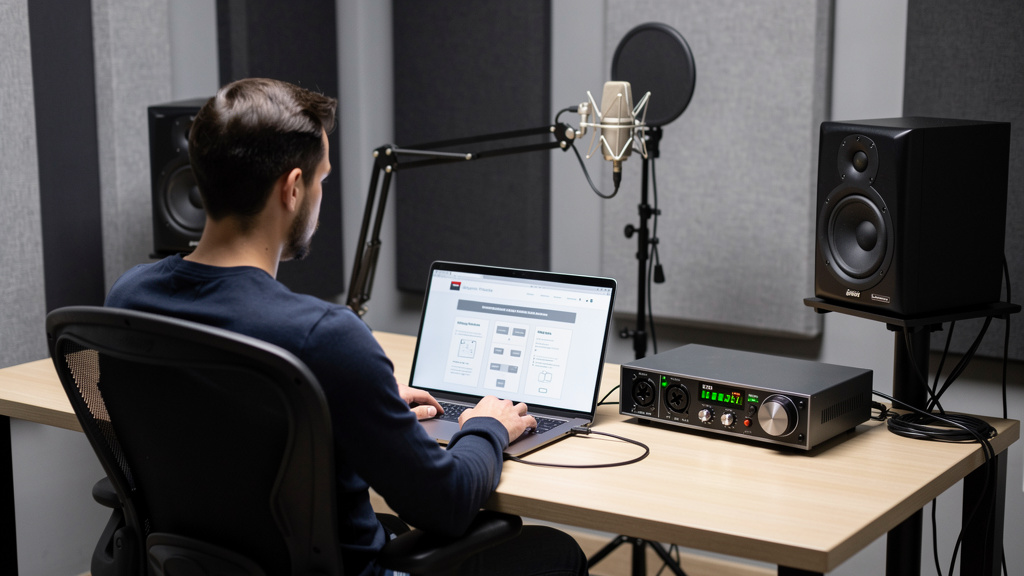
You know the feeling: your room sounds right, your work is strong, clients are happy, and somehow the studios showing up ahead of you in local search are the ones with weaker portfolios and worse mixes. That disconnect is brutal. Most of the time, it is not because Google prefers bigger brands. It is because your site is arranged like an online flyer instead of a local business asset.
If you want local SEO for studios to work, your site structure has to make your location, services, and trust signals obvious. Not vague. Not buried. Obvious. A good studio website design does not just look polished. It helps search engines understand who you serve, where you serve them, and why someone nearby should book with you.
Start with the pages local clients are actually searching for
A lot of studio owners cram everything into a home page, a rates page, and a contact page. That feels simple, but it weakens your visibility. Search engines do better when each core service has its own page with a clear local intent.
For most studios, the cleanest structure looks like this:
- Home page focused on your main offer, city, and strongest proof.
- Service pages for the major things people hire you for.
- Location pages if you serve multiple nearby cities or neighborhoods.
- Portfolio or work samples with context, not just embeds.
- About page that builds credibility and local relevance.
- Contact or booking page with friction-free conversion paths.
That structure helps a website for a recording studio rank for more than your brand name. Instead of hoping one page ranks for recording, mixing, podcast production, and voiceover in five towns at once, you give each topic room to breathe.
For example, if you run a studio in Nashville and your strongest paid work is vocal recording, mixing, and podcast production, those should not live as three bullet points on one page. They should be three separate pages with their own copy, examples, FAQs, and local context.
Build service pages around buyer intent, not your internal menu
Studio owners often name pages the way they talk in the control room. Clients do not always search that way. A musician might search “recording studio in Nashville.” A business owner might search “podcast studio near me.” A voice actor might search “vocal recording studio Nashville.”
Your navigation should reflect that reality. Good service pages often include:
- A clear headline saying what the service is and where you offer it
- A short explanation of who it is for
- Your process, so a first-time client knows what happens
- Gear or room details only where they support the buying decision
- Relevant work samples or case-style examples
- Answers to common pre-booking questions
- A direct booking or inquiry path
This matters because local SEO is not only about getting traffic. It is about getting qualified traffic. Someone searching for an appointment booking website experience expects an easy path to schedule, and someone hunting for studio time wants confidence that your room fits their project.
If your site makes them dig for basics like rates, location, session types, or how to book, you lose momentum fast.
Create location relevance without writing thin city pages
This is where many studios go wrong. They hear they need local pages, then publish five nearly identical pages that swap only the city name. That is weak for readers and weak for search visibility.
If you truly serve multiple places, each location page should speak to that area in a useful way. Mention practical details a real client from that area cares about:
- How far the studio is from that city or neighborhood
- What kinds of clients from there usually book you
- Parking, load-in, transit access, or session logistics
- Whether remote prep or attended sessions are common
- Examples of projects tied to that market
Maybe clients from a nearby college district use you for audition reels and songwriting demos. Maybe agencies from downtown book voiceover and podcast sessions. Those differences give the page substance.
If you only have one physical location, that is fine. A strong home page and service pages with consistent city references usually outperform a pile of thin geo-pages.
Keep your site architecture shallow and easy to crawl
A local business site should be easy for both humans and search engines to move through. If someone lands on your home page, they should reach your core services in one click and your booking path in no more than two.
Here is a practical structure that works well for many studios:
- Home
- Services
- Individual service pages
- Portfolio or samples
- About
- Contact or Book Now
Avoid burying important pages under vague dropdown labels or clever naming. “Create,” “Experiences,” or “Solutions” may sound branded, but they hide what the page is actually about. Search visibility usually improves when page names are plain and specific.
This is one place where a professionally planned done-for-you website for a studio business can save a lot of trial and error. Architecture affects rankings, conversions, and how easy future content becomes to publish.
Make the home page a local authority page, not just a welcome mat
Your home page has a big job. It should signal what you do, where you do it, and why someone should trust you within a few seconds. Think of it as the hub of your local relevance.
A strong home page usually includes:
- Your primary service and city near the top of the page
- A brief positioning statement that tells people what kind of projects you handle
- Links to your main service pages
- Social proof such as testimonials or recognizable client types
- Photos of the actual space
- A clear booking action
If you want to get more studio bookings online, this page cannot be all mood and no signal. Great images help, but they should support clarity, not replace it.
Use internal links like signal flow, not decoration
Think of internal links the way you think about routing in a studio. If signal has no logical path, things get messy fast. If pages have no logical linking path, search engines struggle to understand priorities and visitors struggle to move toward a booking.
Each service page should link back to the home page, to related services, and to the booking page. Your portfolio pages should link to the relevant service that produced that work. Your about page should link to service pages and your contact page.
That creates context. A page about podcast recording that links to your podcast editing page and your booking page tells both readers and search engines that these pages belong together.
Support your structure with trust-heavy local details
Local SEO is not just page hierarchy. It is also consistency and trust. Search engines and people both look for corroboration. Your address, service area, contact information, and booking process should be easy to verify across the site.
Make sure these details are present and consistent:
- Business name
- Address or clearly stated service area
- Phone and email
- Hours or session availability expectations
- Embedded map if clients visit in person
- Testimonials that mention the experience, not just praise
If your studio site is also your sales system, even better. A website with online booking, lead capture, and follow-up can turn local traffic into actual conversations instead of abandoned inquiries. That is where structure, conversion flow, and business systems start overlapping.
Publish supporting content that feeds your service pages
Blog content helps when it supports commercial pages instead of wandering off-topic. For local visibility, write articles that answer the questions people ask before booking, then link those articles to the most relevant service pages.
Good examples include:
- What to bring to a vocal recording session
- How long a podcast session usually takes
- Whether mixing is included or separate
- How to choose between attended and remote sessions
These pieces build relevance and trust while giving you natural internal linking opportunities. They also help a professional website for a creative business feel alive rather than static.
What to fix first if your site is not ranking locally
If your current site is underperforming, do not start by obsessing over tiny technical tweaks. Fix the structural issues first.
- Separate your major services into individual pages.
- Add your city and service language to page titles, headings, and copy where it reads naturally.
- Tighten navigation so priority pages are easy to reach.
- Add stronger local proof: photos, testimonials, and real logistical details.
- Make booking obvious with a contact path on every core page.
Those five changes often do more than minor design refreshes. A beautiful site that hides your services and location will still struggle.
If you are at the point where the structure, copy, booking flow, and follow-up systems all need attention, it may be time to hire a web designer for your studio who understands both local search and how creative clients actually buy. That combination is what turns a studio site from a brochure into a real booking engine.
Comments (0)
Leave a Comment
No comments yet. Be the first to comment!