Top 10 Reasons a DI Bass Track Sounds Wrong Before Mixing
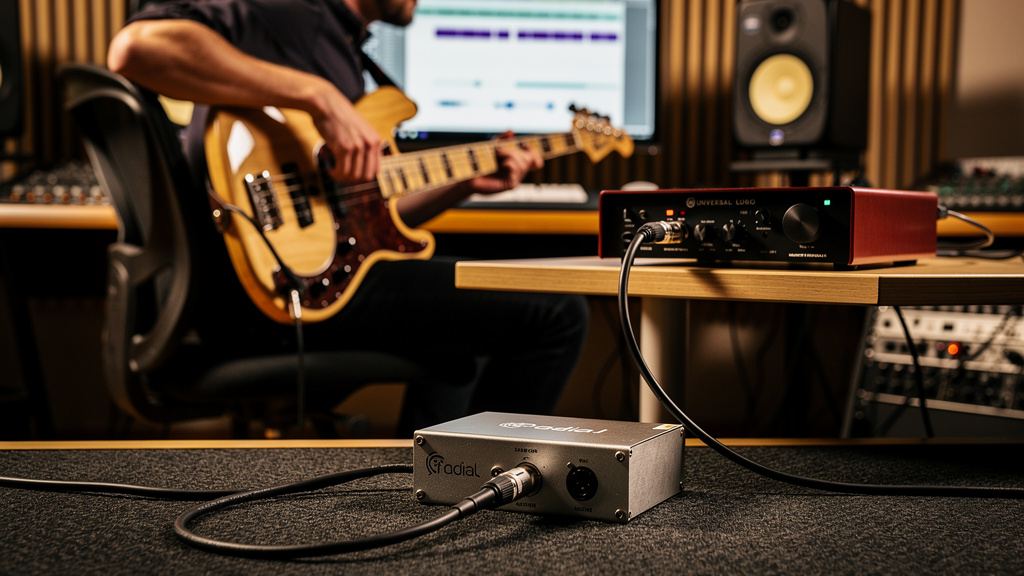
You know the feeling: the player was solid, the bass was decent, the part works, and somehow the recorded DI still feels disappointing. Not obviously broken. Just wrong. Maybe it is papery on top, hollow in the low mids, weirdly clanky, or soft in a way that disappears the second the chorus hits. That is the kind of problem that wastes an afternoon, because by the time you notice it in context, you are already reaching for EQ, saturation and multiband moves to repair something that really started at the input.
DI bass is one of those signals people treat as simple right up until it starts fighting the mix. The good news is that when a bass DI sounds off before mixing, there are only so many places the problem usually begins. Here are the ten I see most often.
1. The instrument itself is not giving the recorder a healthy signal
This sounds obvious, but it gets skipped constantly because the bass is still passing audio. A weak onboard battery in an active bass, oxidized output jack contacts, tired strings, or a pickup height that drifted out of position can all make a DI track feel strangely lifeless or uneven before it ever hits a preamp.
A dying 9V battery is especially deceptive. It does not always produce dramatic distortion right away. Sometimes it just narrows the sound, softens the transient response and makes the top end feel brittle rather than clear. On passive instruments, poor contact at the output jack can shave off punch and add intermittent dullness that looks like a performance inconsistency when it is really a hardware issue.
If the bass sounds uninspiring in the room through a known-good amp or headphone practice rig, that character will follow the DI. Recording exposes what the player and instrument are actually producing.
2. You plugged into the wrong input
Bass wants to see the right impedance. If you feed it into a line input instead of a proper instrument input or DI, the track can lose weight, brightness and immediacy in a way that is hard to undo later. The phrase people use is usually “it sounds flat,” but what they are hearing is a loading mismatch.
A passive bass plugged into the wrong destination often comes back with softened attack and an oddly pinched midrange. It is not just quieter. It is less alive. Active basses can hide this a little better, which is why the mistake sometimes survives a session unnoticed, but the passive instrument tells on you fast.
If you are moving quickly, double-check what the interface jack actually is. Combo jacks and switchable channels make it easy to assume you are on Hi-Z when you are not.
3. The DI box is technically working but wrong for that bass
Not every DI reacts the same way to every instrument. A passive DI on a low-output passive bass can sometimes leave you chasing level and presence. An active DI fed by a hot active bass can occasionally exaggerate the very edge you were hoping to tame. Transformer character, headroom and input behavior all matter more on bass than many people expect.
This is why two clean recordings can still feel very different in the mix. One has note shape, body and believable finger noise. The other has the same notes, but the front edge feels disconnected from the fundamental. That is not always a mixing issue. It can be the DI choice.
You do not need a museum of boxes to improve this. You just need to notice that “signal present” and “good bass DI” are not the same standard.
4. The gain staging is safe, but not optimal
There is a modern habit of tracking everything ultra-conservatively, which is often wise, but bass can suffer when that turns into fear of level. Too low, and the performance can feel small and overly dependent on later makeup gain, especially if the player has wide dynamics. Too hot, and you may not see obvious red lights while still flattening the life out of the transient somewhere in the chain.
With bass, the ugly part of clipping is not always dramatic. It can sound like the note lost depth or the attack got oddly hard. The waveform may look controlled while the tone has already stiffened.
Good bass gain staging is less about “as loud as possible” and more about preserving the relationship between attack, sustain and low-frequency bloom. Once that relationship is skewed, mix moves start becoming corrective instead of musical.
5. The player monitored a sound that changed how they played
This one gets missed because the recorded track may be technically clean. If the bassist tracked while hearing an over-bright cue mix, a harsh amp sim, too much latency, or a thin headphone feed, their hands often adapt in unhelpful ways. They dig in harder, mute differently, pluck closer to the bridge, or overcompensate dynamically.
Then you solo the DI later and wonder why every note speaks with the wrong attitude. The recording chain did its job. The monitoring chain changed the performance.
For bass, feel and feedback are everything. A player who cannot hear solid low-end support in the phones often creates extra clank and finger noise trying to “find” definition. That is not bad playing. It is a bad monitoring conversation.
6. You captured two paths that are slightly out of time
Many bass sessions record a clean DI alongside an amp sim, pedal output, hardware preamp or miked cabinet. That is smart. The problem starts when one of those paths is monitored or printed with latency, phase shift or conversion delay relative to the other, and then both are treated as if they are naturally compatible.
Even tiny timing offsets can make the low end seem blurry while the upper attack gets hyped in a fake, plasticky way. The common reaction is to keep EQing the DI because it feels weak on its own and messy when blended. Really, the blend is partially canceling the part you wanted to keep.
If the bass only sounds “right” when one source is muted, suspect time relationship before tone controls.
7. Pickup balance is making the notes speak unevenly
On basses with multiple pickups, blend settings can quietly create mix problems long before the first plugin. Solo bridge pickup can sound exciting in a room and then vanish in a dense arrangement. Neck-heavy blends can feel huge alone and go cloudy under guitars and keys. Even a small favor toward one pickup can change not just tone, but the way different registers speak.
This is why some DI tracks feel inconsistent from note to note while the player was perfectly steady. You are hearing a setup choice that emphasizes one area of the fingerboard differently from another.
There is no universally correct pickup blend. There is only the blend that supports the part being recorded. The safest move is not always “everything full up.” It is the setting that gives the note a stable center.
8. String and technique noise are being mistaken for definition
A lot of bass tracks arrive with plenty of information above 2 kHz and still somehow no usable clarity. That is because clank, scrape and finger slap are not the same thing as note definition. If the source leans too hard on incidental noise, the DI can seem exciting soloed but become tiring and vague in a mix.
This often happens when players chase articulation by attacking harder instead of adjusting hand position or muting. It also happens when very fresh stainless strings meet an already bright active front end. The result is a track full of edge but short on authority.
Real bass definition usually lives in the relationship between low mids and upper mids, not just extra top-end debris. When a DI sounds “detailed” but gives you no reliable center note, that is the clue.
9. A hidden processor is shaping the tone before recording
Interfaces, pedals, onboard preamps, channel strips and software monitoring paths can all add processing people forget is active. A subtle high-pass filter, pad, cab sim, enhancer, compressor or bright switch can leave a bass DI sounding pre-solved in exactly the wrong way.
What makes this issue nasty is that the track does not necessarily sound broken. It just sounds unusually limited in what it can become. Maybe the lows never quite fill out. Maybe every note arrives with a clicky front edge you did not hear in the room. Maybe compression is already pinning down the sustain before mix compression even starts.
When bass feels boxed in early, trace every stage that can alter the signal, not just the obvious ones. Hidden processing has started many “mystery tone” arguments.
10. The arrangement left no room, so the DI gets blamed
Sometimes the bass track is fine. What sounds wrong is actually a context problem: kick choice, synth low end, layered rhythm guitars, tuning decisions, or dense low-mid buildup elsewhere. Bass is the instrument most likely to be accused when the arrangement is overcrowded.
That does not mean the DI is innocent every time. It means you should be careful before diagnosing a tracking failure from a mix collision. A solid DI can seem dull because another instrument is occupying its speaking range. It can seem too bright because there is no low-mid space left for body. It can seem inconsistent because the kick pattern keeps reframing its envelope.
If you keep “fixing” the bass and each move makes the whole production less stable, stop and ask whether the source is really the source of the problem.
How to diagnose it without spiraling
When a bass DI feels wrong, resist the urge to stack processing immediately. Narrow the question first. Listen to the instrument by itself, then in context, then against a known-good bass track if you have one. Change only one variable at a time.
- Verify the instrument: battery, jack, controls, strings, pickup balance.
- Confirm the input path: Hi-Z or DI, not accidental line input.
- Check whether another printed or monitored path is interacting with the DI.
- Listen for hidden processing before the recorder or in the cue path.
- Only then decide whether the issue is source tone, performance feel or arrangement masking.
That order matters because bass problems become more confusing the later in the chain you try to solve them. If you want a visual, methodical way to trace noise and signal-path issues like this without getting lost in forum contradictions, this interactive workbook is a solid resource to keep nearby.
The practical takeaway is simple: when a DI bass track sounds wrong before mixing, believe it. Do not assume the mix will magically redeem it. The best fix is usually upstream, where the note, the instrument and the input path are still telling the truth.
Comments (0)
Leave a Comment
No comments yet. Be the first to comment!