Top Website Features Studio Owners Actually Need
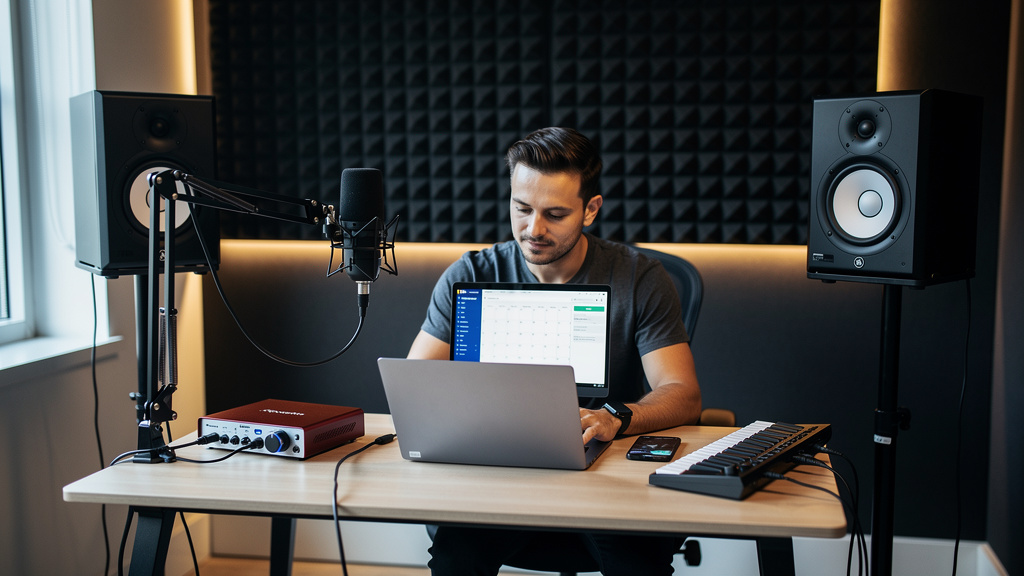
You know the feeling: someone messages at 11:30 p.m. asking about rates, another person wants to book vocals next week, a past client says they never saw your follow-up, and somehow you are still copying details from Instagram DMs into notes on your phone. The studio may sound dialed in, but the business side is noisy. A studio website should not just sit there looking respectable. It should catch interest, answer objections, organize leads, and move people toward a paid session without you babysitting the process.
That matters even more for studios because your clients often arrive with uncertainty. They may not know how many hours they need, whether mixing is included, what file prep looks like, or if your room is right for their project. A strong website for a recording studio handles that hesitation before it turns into a lost booking.
Your website needs to do more than prove you exist
A lot of studio sites stop at the basics: a homepage, a gear list, a contact form, maybe a few photos. That is fine for credibility, but it does not create momentum. If you want to get more studio bookings online, the site has to reduce friction at every step.
The best studio website design does three jobs at once:
- It shows that your room and process are professional.
- It makes booking or inquiring feel simple and low-risk.
- It keeps every lead from disappearing into your inbox.
When those three pieces work together, your site starts behaving less like a brochure and more like a front-desk assistant who never misses a call.
1. Booking that matches how studio clients actually buy
A website with online booking sounds obvious, but many studio owners set it up in a way that creates confusion. Clients do not always want to book a single generic “session.” They need options that reflect real services: tracking, vocal sessions, mixing, podcast recording, consultations, production work, or room rental.
Your appointment booking website should let visitors quickly understand what they are reserving, how long it takes, and what happens next. That means clear service blocks, realistic session lengths, pricing guidance where appropriate, and buffer time between bookings.
At minimum, your booking flow should answer these questions before a client asks them:
- What am I booking?
- How many hours should I choose?
- What does it cost or what is the starting rate?
- Do I pay a deposit?
- What should I bring or send in advance?
- Will I get a confirmation and reminder?
If your work is highly custom, do not force full self-service scheduling. A better approach is a two-step path: pick the service, submit project details, then choose from approved time slots after you review the request. That keeps control in your hands while still giving the client a smooth experience.
This is where many owners decide to use a done-for-you website for their studio rather than piecing together forms, calendar tools, and payment pages on their own. The key is not having booking for its own sake. It is having booking that reflects the way your room actually operates.
2. A CRM that remembers everything you forget
Most studios do not think they need a CRM until leads start leaking out of five different places. One inquiry comes from the contact form, one from email, one from social media, and another from someone who downloaded your rate sheet three weeks ago. Without a system, follow-up becomes random, and random follow-up costs money.
A CRM and sales funnel website gives you a central record of every inquiry, client, project type, and conversation stage. For a studio owner, that means practical things:
- You can see who asked for rates but never booked.
- You can separate mixing leads from tracking leads.
- You can assign status like new lead, quoted, deposit paid, completed, or needs follow-up.
- You can keep notes on preferences, recurring collaborators, and repeat business opportunities.
This matters because studio sales are rarely one-touch. A rapper asking about a two-hour vocal block today may become a recurring client for months. A podcaster asking about a sample session may convert after hearing your room, your workflow, and your editing turnaround. If you are relying on memory, you are building your sales process on a patch cable held together with tape.
3. Sales funnels that guide the right people to the right offer
“Sales funnel” can sound overly corporate for a creative business, but in practice it just means this: different visitors need different next steps. A band comparing studios needs one path. A local business owner needing voiceover or podcast recording needs another. A mixing prospect from outside your city needs something else entirely.
Good studio website design creates these paths intentionally. Instead of sending every visitor to one generic contact form, build service-specific journeys.
A simple funnel for a studio usually looks like this:
- Visitor lands on a page tailored to a service, such as vocal recording, podcast production, or mixing.
- The page answers common objections with examples, process details, turnaround expectations, and proof of results.
- The visitor is offered one clear next action: book a call, request a quote, reserve a session, or download prep information.
- The CRM captures the lead and starts follow-up automatically.
- The visitor receives reminders, FAQs, or trust-building emails until they book.
That is what turns a professional website for a creative business into a working sales system. Not hype. Not fancy animation. Clear paths.
4. Automated follow-up that feels human
One of the easiest wins for studio owners is automated email that handles the routine communication you keep repeating. Not spam. Useful follow-up.
For example, a new lead who asks about recording should automatically receive a short, well-written sequence covering your booking process, deposit policy, how to prepare files, and what to expect at the session. A completed client can receive a check-in a few weeks later offering mixing, mastering coordination, or another booking.
The strongest automated sequences usually cover:
- Lead acknowledgment within minutes
- Session prep instructions
- Reminder emails before booked time
- Follow-up after an estimate is sent
- Re-engagement for old clients
- Review or referral requests after a successful project
Automation works best when the writing sounds like you. Warm, specific, direct. If your emails read like they came from a faceless marketing platform, people feel it immediately.
5. Service pages built for conversion, not just SEO
Yes, local SEO for studios matters. People search for recording studios, podcast studios, mixing engineers, and vocal recording in their area every day. But traffic alone does not pay for new monitors or rent. The page also has to convert.
A high-performing service page should include:
- A clear statement of who the service is for
- A realistic outline of the process
- Starting price or quote expectations where possible
- Photos of the actual room
- Selected work examples or client outcomes
- Frequently asked questions
- One primary call to action
This is where many studio owners miss the mark. They write a page full of broad claims about quality and passion, but never answer the practical questions a buyer has before spending money.
If somebody lands on your vocal recording page, they should know whether your room suits their style, how session time is structured, whether editing is included, and what files they need to bring. That level of clarity is what makes custom website design for small business outperform cookie-cutter templates.
6. Mobile-first contact flow
A huge share of studio prospects will find you on a phone, often while multitasking. If your forms are awkward, your buttons are tiny, or your booking flow asks for too much too soon, they are gone.
Test your site on a phone and ask one brutal question: how many taps does it take for someone to become a lead? The answer should be fewer than you think.
Your mobile flow should make these actions effortless:
- Call or message you
- Check availability
- Request a quote
- Book a session
- Find your location
That sounds basic, but it is often where a beautiful desktop design quietly loses business. Good web design services for small business are less about visual tricks and more about removing friction where real clients hesitate.
7. Reporting that tells you where bookings really come from
If you do not know which pages generate inquiries, which services convert, or where your best leads originate, you are guessing. A studio owner should be able to answer a few simple questions every month:
- Which service gets the most inquiries?
- Which inquiry source produces the best clients?
- How many leads book after the first contact?
- Where do visitors drop off in the booking process?
Those numbers help you make smarter decisions about your offers, your page structure, and your marketing time. Maybe your mixing page gets traffic but not inquiries, which suggests a messaging problem. Maybe your podcast page converts unusually well, which points to a growth opportunity. Data is not just for big companies. It helps small studios stop throwing energy at the wrong channel.
What to prioritize first if your current site is underperforming
If your website feels dated or passive, do not try to rebuild everything at once. Start in this order:
- Create separate pages for each core service.
- Add one strong inquiry or booking path for each service.
- Connect every form to a CRM so leads stop getting lost.
- Set up automated confirmations and follow-up emails.
- Refine mobile usability and page speed.
- Track which pages and offers actually produce bookings.
That sequence works because it fixes the biggest leaks first: unclear offers, weak conversion paths, and inconsistent follow-up.
A website for a recording studio should feel as intentional as your signal flow. Every page should have a purpose. Every inquiry should land in one place. Every serious prospect should know the next step without having to ask.
If that sounds like a lot to build and maintain while running sessions, editing projects, and keeping the room moving, it is completely reasonable to hire a web designer for your studio who already understands booking systems, CRM setup, and sales funnels for creative businesses. The right build does not just make your studio look polished. It helps your calendar fill up with less chasing and less admin.
Comments (0)
Leave a Comment
No comments yet. Be the first to comment!