Turn Your Studio Site Into a Client-Booking Machine
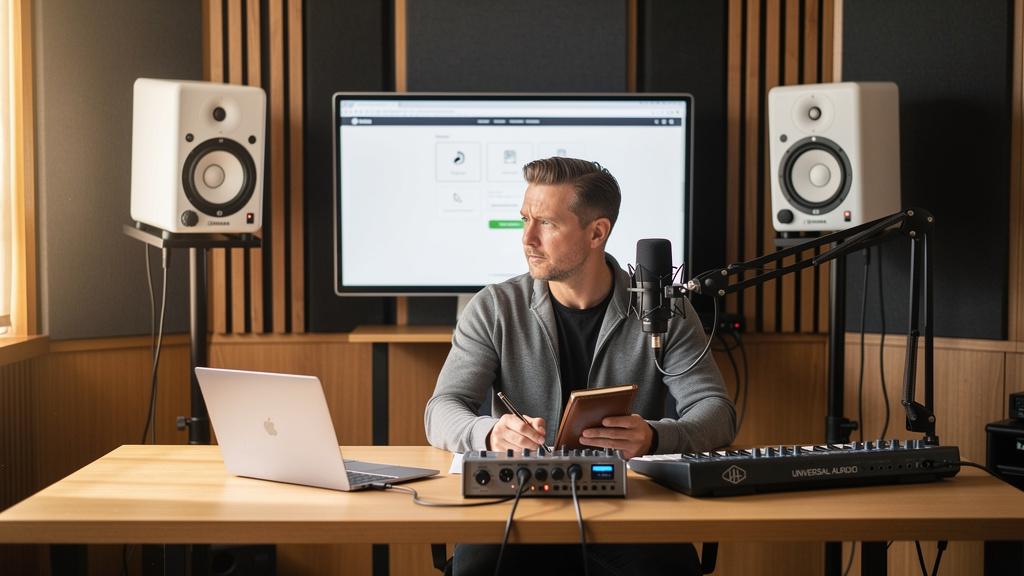
You know the feeling: someone lands on your studio site, pokes around for a minute, then disappears. No inquiry. No booking. No "hey, I love your room, are you free next Thursday?" Just silence. And that silence is expensive, because by the time a serious client reaches your website, they’re already close to a decision. If the site creates friction, doubt, or confusion, they don’t usually ask for help. They move on.
A studio website that books well is not just a prettier version of your Instagram or a digital flyer with your gear list on it. It’s a sales system. For musicians, podcasters, voice talent, and small production teams, the site has one job: reduce uncertainty and make the next step feel easy. That is how you get more studio bookings online without sounding pushy or turning your brand into a hard sell.
Why most studio sites leak good clients
Studio owners often think the problem is traffic. Sometimes it is. But more often, the bigger issue is conversion. People arrive interested, then hit one of the usual speed bumps:
- They can’t tell what you actually offer.
- They don’t know whether you fit their genre, project, or budget.
- There’s no clear path to book, request a quote, or start a conversation.
- The site feels dated, which quietly raises doubts about reliability.
- They have to work too hard to find samples, rates, location, or availability.
That friction matters more in creative services than many owners realize. Clients are not only buying a room. They’re buying confidence: confidence that you understand the session, that the process will be smooth, and that they won’t waste a day or a budget line figuring things out.
That’s why a strong website for a recording studio has to do more than look clean. It has to answer the unspoken questions fast.
Start with one primary booking path
The fastest way to weaken a studio website is to give every visitor six equal next steps. Follow on social, read the blog, email directly, call, fill out a long form, browse rates, maybe DM later. Too many choices create hesitation.
Pick one primary conversion action and build around it. For most studios, that means one of these:
- Book a session online
- Request a quote for a custom project
- Schedule a discovery call
Which one fits depends on your business model. If your work is standardized, like podcast recording blocks or rehearsal room rentals, a website with online booking can be the cleanest route. If you handle full production, mixing, voiceover packages, or label work, a quote request or consult call often converts better because clients need a little guidance before they commit.
The key is consistency. Your homepage, services pages, and contact area should all point toward the same next step. A visitor should never have to guess how business gets done.
Build pages around client decisions, not your studio pride
Yes, people like gear. Yes, room photos matter. But clients book when they can quickly match your service to their problem. That means your page structure should follow the way buyers think.
A high-converting studio website design usually needs these core pages:
- A homepage that states who you help, what you do, and what to do next
- A services page with clear session types, outcomes, and starting prices or pricing logic
- A portfolio or sample page with audio, video, or case-study proof
- An about page that makes you human and credible
- A contact or booking page that removes friction
Notice what’s missing from that list: a giant wall of equipment as the star of the show. Gear supports trust, but clients usually care more about results, workflow, vibe, and fit. A songwriter wants to know if you can help finish a record without chaos. A podcaster wants to know whether recording will feel easy and polished. A voice client wants fast turnaround and clean communication.
Write each page to answer those real buying questions. That is where many studio owners need either sharper messaging or professional studio website design help, because knowing your craft and presenting your value online are two different skills.
Use your homepage like a control room, not a poster
Your homepage should guide the session from the first second. Think of it like signal flow: every element should feed the next cleanly, with no noise in the path.
A strong homepage usually needs:
- A clear opening statement. Say who you serve and what kind of work you do.
- Immediate proof. Show a room photo, artist credits, samples, testimonials, or project types.
- A visible call to action. Book, request a quote, or schedule a call.
- Service summaries. Give visitors a quick map of your offers.
- Trust builders. Explain your process, response time, experience, and client experience.
- A repeated next step. Don’t make people scroll back up to act.
One common mistake is opening with vague language like "bringing your vision to life." That sounds pleasant, but it doesn’t tell a drummer, producer, or marketing manager whether you record live bands, edit podcasts, or mix release-ready singles. Specificity converts.
Make booking feel low-risk
Every client is doing a quick risk calculation. They’re wondering: Will this take forever? Will I get ghosted? Will I end up in a weird back-and-forth just to learn the price?
Your site should calm those fears before they form. The best way to do that is to explain the booking process clearly.
Spell it out in plain language:
- Choose a session type or request a quote.
- Share project details.
- Receive availability or scope.
- Confirm your slot and deposit.
- Show up ready to create.
This works especially well on an appointment booking website because it turns the next step into something concrete. You are not asking people to "reach out." You are showing them what happens after they do.
If you can, add practical details clients care about:
- Typical turnaround times
- Deposit policy
- Session minimums
- Revision limits
- Parking, location, or remote-work options
The more preventable uncertainty you remove, the more inquiries turn into committed bookings.
Website with online booking is only useful if the workflow holds together
Online booking sounds simple until the back end becomes a mess. Double-booked calendars, missed leads, no follow-up, inconsistent deposits, forgotten reminders. That is how studios lose work after doing the hard part of getting attention.
A better approach is to think in systems, not pages. Your website should connect the front-end booking experience to your actual business workflow. That often means some version of a CRM and sales funnel website: inquiries are captured, tagged, replied to promptly, and moved through a process instead of sitting in your inbox like loose session notes.
At minimum, your setup should do these things well:
- Capture inquiry details without long, annoying forms
- Send an immediate confirmation
- Route the lead into an organized follow-up sequence
- Track whether someone booked, ghosted, or needs a reminder
- Keep your calendar and availability accurate
This is where many owners hit the limit of DIY. A site can look decent and still fail operationally. If your goal is not just a prettier homepage but a done-for-you website that actually supports revenue, the wiring behind the walls matters as much as the design on the front.
Trust comes from proof, not claims
Most studios say some version of "high quality," "professional," or "state-of-the-art." None of that carries much weight by itself anymore. Clients trust specifics.
Better proof includes:
- Before-and-after examples
- Short case studies about a project problem and outcome
- Testimonials that mention speed, communication, comfort, or results
- Real photos of your room and session setup
- Credits that fit the kind of work you want more of
If you want better-fit clients, show more examples of the work you want repeated. If you’re moving toward podcast production, don’t make your site feel like it only serves metal bands. If you want commercial voiceover work, don’t bury your VO process under live-room photos and amp stacks.
Local visibility still matters for studios
Even when referrals drive business, many prospects will still search your name, your city, and your services before contacting you. That means your site should support local SEO for studios without reading like it was written for a robot.
Use your location naturally in your page copy, page titles, service descriptions, and contact details. Mention the areas you serve. Create service pages that reflect real client intent, like podcast recording, mixing, overdubs, or voiceover, if those are true parts of your business. A professional website for a creative business should be discoverable and persuasive at the same time.
This is also why generic templates often hit a ceiling. They can make a studio look presentable, but they rarely align messaging, booking flow, search visibility, and follow-up in a way that consistently wins work.
The benchmark: can a first-time visitor book without needing you?
Here’s the test I give studio owners: can a serious first-time visitor understand what you do, decide whether you fit, and take the next step in under three minutes without sending a clarification email?
If not, the site is probably costing you bookings.
That does not mean your website needs to be huge. It means it needs to be intentional. Good custom website design for small business is not about adding more pages. It’s about removing hesitation from the path between interest and action.
If you want to tighten that path yourself, start by auditing your homepage, services, and booking process this week. Watch where a new visitor would get stuck. If you’d rather have the whole system built properly, from messaging to automation, AleXavior offers done-for-you websites for studios and creative businesses that are built to support real bookings, not just page views.
Comments (0)
Leave a Comment
No comments yet. Be the first to comment!