Turn Your Studio Website Into a Booking Machine
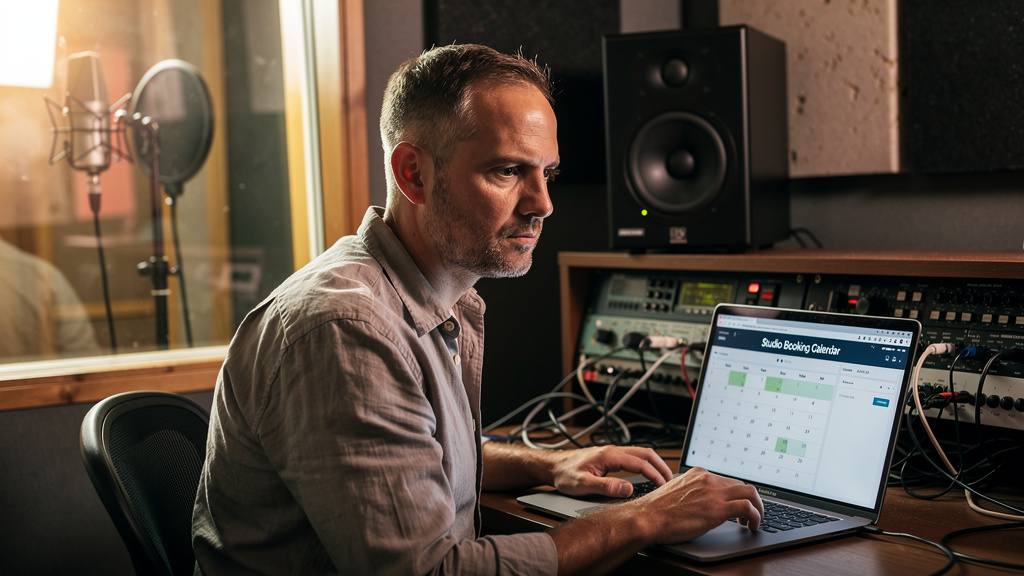
You know the feeling: your mixes are solid, your room looks great, your clients leave happy, and yet your website just sort of sits there like a digital brochure collecting dust. People visit, poke around, maybe listen to a sample, then disappear. No inquiry. No booking. No clear next step. For a studio owner, that’s a brutal kind of silence, because the problem usually isn’t your work. It’s that your site isn’t guiding people toward a decision.
A good studio website should do more than prove you exist. It should answer the questions a hesitant client is already asking, reduce friction, build trust fast, and make booking feel easy. If you want to get more studio bookings online, your site has to function like part sales process, part assistant, and part front desk.
Why a website for a recording studio fails to convert
Most studio sites miss in one of three places: the message is vague, the path to booking is clumsy, or the site never deals with client anxiety. Musicians, podcasters, and voice clients are rarely just buying time in a room. They’re buying confidence. They want to know whether you can make them sound good, keep the session moving, and avoid wasting their budget.
If your homepage leads with gear photos but never clearly says who you serve, what you help them create, and how to book, visitors have to work too hard. And when people have to work, they bounce.
The strongest studio website design starts by clarifying one thing: who the site is for. A rapper looking for vocal production, a podcast host wanting remote-ready editing, and a singer-songwriter booking a live band session all need different language, examples, and calls to action.
Start with one clear promise above the fold
The first screen of your site has one job: tell the right person they’re in the right place. Don’t lead with a poetic slogan that could belong to any creative business. Lead with a practical promise.
A strong hero section usually includes:
- Who you work with
- What you help them make
- What makes your process easier or better
- A single primary action, usually booking a call or session
For example, a studio serving local artists might say that it helps independent musicians record, mix, and release pro-sounding tracks without the chaos of piecing everything together across multiple vendors. That speaks directly to a problem the client already feels.
If your current site doesn’t do that, it may be time to rethink the structure or work with a team that understands studio-focused website strategy instead of generic templates.
Build pages around services people actually search for
One of the biggest mistakes in a professional website for a creative business is burying services on a single catch-all page. That may feel tidy to you, but it weakens both conversions and local search visibility.
Create a separate page for each core offer. That could include vocal recording, podcast production, mixing, mastering, rehearsal capture, remote overdubs, or studio rental. Each page should explain the outcome, not just the task.
Think less like a gear list and more like a client conversation. A podcast production page, for instance, should talk about clean dialogue, consistent levels, remote guest workflows, and delivery that’s ready to publish. A vocal recording page should address comfort, coaching, comping, and polished results.
This structure helps with local SEO for studios because each service page can target a specific search intent. It also gives visitors a shorter path to saying yes.
What every service page should include
- A plain-language headline. Name the service clearly so the visitor doesn’t have to decode it.
- The problem you solve. Show that you understand what usually goes wrong without professional help.
- Your process. Outline what happens before, during, and after the session.
- Pricing guidance. If you can’t publish exact rates, give starting prices or package ranges.
- Work samples. Use relevant examples, not a random portfolio dump.
- A direct booking action. Every page should lead to one simple next step.
That last point matters more than most studio owners realize. If someone lands on your podcast page, don’t make them hunt through a generic contact form buried in the footer.
Use a website with online booking, not just a contact form
Contact forms create lag. Lag kills momentum. A visitor gets interested, sends a message, then waits. During that wait, they may compare three other studios, forget to reply, or lose the urgency that brought them there in the first place.
An appointment booking website shortens that gap. It lets a serious prospect choose a session type, pick a time, answer key intake questions, and commit while interest is still high.
That doesn’t mean every service needs instant booking. High-ticket projects may still need a discovery call. But your site should route people based on readiness:
- Simple, fixed-scope services can go straight to booking
- Larger projects can book a consult call
- Not-ready visitors can join your email list or request a quote
That’s how a website with online booking starts acting like a real business tool instead of an online flyer.
Reduce the fears that stop people from booking
Many clients delay because they’re worried about things they won’t say out loud. They wonder if they’re prepared enough, talented enough, or experienced enough. They worry they’ll be judged, oversold, or left confused.
Your website should calm those nerves before they ever contact you.
Add copy that answers the emotional friction directly:
- Do you welcome first-time artists or podcasters?
- Can you help clients who don’t know what they need yet?
- What should they bring to the session?
- How do revisions work?
- What happens if they need engineering, coaching, or editing help?
A short FAQ can do a lot of heavy lifting here. So can client testimonials that mention your process, communication, and professionalism instead of only saying the final product sounded great.
People don’t book when they understand your gear. They book when they understand what working with you will feel like.
Show proof that sounds and feels specific
“We provide high-quality audio” means almost nothing now. Everyone says that. Real proof is more concrete.
Use before-and-after clips where appropriate. Share short case studies. Explain what the client came in with, what you fixed, and what changed in the final result. If you specialize, lean into it. A studio known for polished vocal production should show sessions, outcomes, and testimonials tied to that lane.
Good proof also includes visual trust signals: a clean room, organized session spaces, behind-the-scenes photos, and a process that looks calm rather than chaotic. This is especially important for first-time clients deciding whether to trust you with their project and their money.
Turn follow-up into part of the booking system
Not everybody books on the first visit. That’s normal. The missed opportunity is when your site has no follow-up at all.
A CRM and sales funnel website can capture inquiries, tag leads by service, and send relevant follow-up automatically. That might mean a welcome email after someone downloads a prep checklist, a reminder after an abandoned booking, or a short sequence explaining what to expect before a first session.
Here’s a practical follow-up flow:
- Visitor lands on a service page.
- They either book, request a quote, or grab a free prep resource.
- The system stores their details by service type.
- They receive a short email sequence that answers common objections.
- If they’re ready, they get prompted back to the booking page.
This is where done-for-you website systems can pull real weight. When the booking form, client intake, email follow-up, and contact records all talk to each other, fewer leads slip through the cracks.
Make local search work for your studio
If you serve a city or region, your site should make that obvious. A lot of studio owners want broader reach and forget that many of their best leads are still local: artists needing recurring sessions, podcasters wanting a reliable room, brands needing voice work, agencies needing fast turnaround.
Local SEO for studios starts with basics done well:
- Use your city or service area naturally in page titles and body copy
- Create service pages tied to real search intent
- Include location details, parking info, and neighborhood references where relevant
- Publish testimonials that mention the kind of work and client context
- Keep contact information consistent across the site
This isn’t glamorous, but it’s often the difference between showing up for “recording studio near me” style searches and being invisible.
What to fix first if your site isn’t booking clients
If your current site looks decent but underperforms, don’t rebuild blindly. Start with the highest-friction points.
- Rewrite the homepage headline. Make it specific to the client and outcome.
- Add a real call to action. One primary action per page is plenty.
- Split out your services. Give each major offer its own page.
- Replace the generic contact form. Add booking or a clear consult path.
- Add trust builders. Testimonials, samples, FAQs, and process details.
- Set up follow-up. Don’t let interested visitors vanish without a trace.
If that sounds like a lot, it is. Good studio website design sits at the intersection of messaging, user flow, search visibility, and automation. That’s why many owners decide to hire a web designer for your studio instead of trying to duct-tape it together between sessions.
If you want a done professionally built system, AleXavior creates done-for-you websites for studios and creative businesses with online booking, CRM, and automated follow-up baked in. The goal is simple: fewer dead-end visits, more qualified inquiries, and more booked work without adding admin chaos to your week.
Your website does not need to be flashy. It needs to be clear, credible, and easy to say yes to. When it does that well, it stops being a portfolio and starts becoming part of your client pipeline.
Comments (0)
Leave a Comment
No comments yet. Be the first to comment!