Website Features Studio Owners Need to Win More Bookings
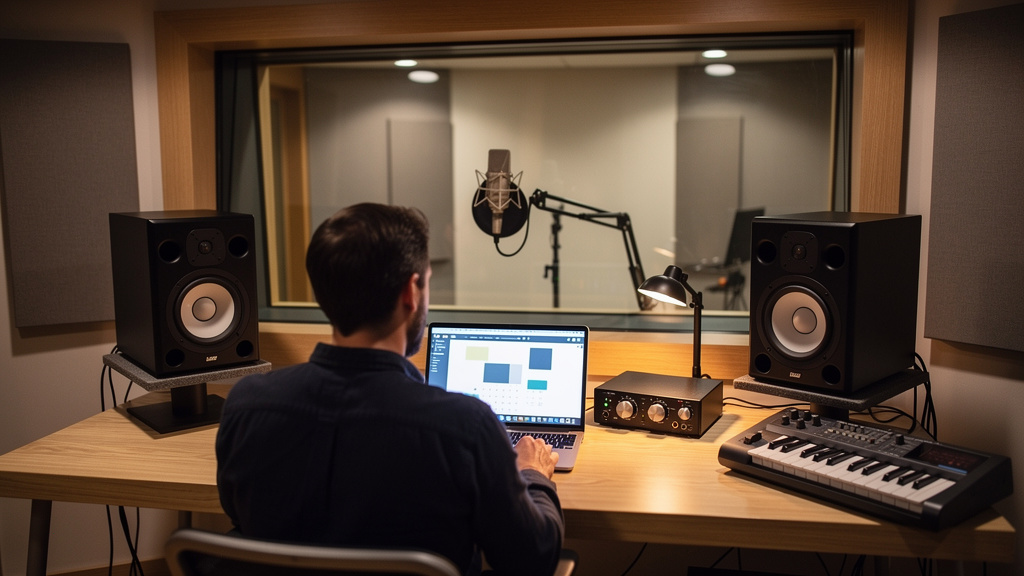
You know the feeling: someone finds your studio, likes the work, means to reach out, and then disappears somewhere between “Looks great” and actually booking a session. The problem usually is not your room, your rates, or your portfolio. It is friction. Too many studio websites still make people email, wait, guess, and drift away. If you want more sessions on the calendar, your site has to behave less like a brochure and more like an assistant that answers questions, qualifies leads, and moves people toward a clear next step.
That matters whether you run a commercial recording room, a mix studio, a podcast setup, or a production company with a small team. A good website for a recording studio does not just show photos and a gear list. It removes hesitation. It helps the right clients understand what you do, what it costs, how the process works, and how to start without awkward back-and-forth.
Your website should reduce decision fatigue
Most prospects are not comparing you against fifty studios with a spreadsheet. They are making a fast emotional decision: “Do I trust this place, and can I get started easily?” Every feature on your site should support that moment.
That means your navigation, calls to action, booking flow, inquiry forms, and follow-up emails should all point in one direction. If your homepage says one thing, your services page says another, and your contact page just dumps an email address onto the screen, you are asking the client to do the work your site should be doing for you.
Strong studio website design is really about signal flow. The source is traffic. The destination is a paid booking or qualified lead. Between those two points, you want as little resistance, confusion, and noise as possible.
The core features that actually help get more studio bookings online
Here are the features that make the biggest difference for studio owners who want a website with online booking, better lead handling, and fewer dead-end inquiries.
1. A clear service structure
Your visitors should understand your offers within seconds. Not your life story, not every mic preamp you own, not a vague promise of “creative excellence.” They need to know what you sell.
- Recording sessions
- Mixing
- Mastering
- Podcast production
- Voiceover recording
- Production and songwriting
- Studio rental or engineer-assisted booking
Each service should have its own page or section with a short explanation, ideal client, expected deliverables, time frame, and next step. This is where many sites lose money. They hide the offer under cool visuals and force visitors to hunt for basics.
If a lead has to send an email just to ask what kind of sessions you do, your site is wasting momentum.
2. Smart online booking, not just a contact form
There is a big difference between “Contact us for availability” and an actual appointment booking website. A proper booking flow gives the client a sense of progress. It should let them choose the service, request a date, provide project details, and understand what happens next.
For many studios, the best setup is not fully automatic instant checkout for every service. Recording projects often need context first. A hybrid model usually works better:
- Let the client choose a service type.
- Show session length options or starting package tiers.
- Collect details like genre, track count, talent count, or target release date.
- Offer preferred dates and times.
- Send an automatic confirmation that explains next steps.
This gives you cleaner inquiries and saves you from chasing missing information. It also makes your business feel organized, which matters more than many studio owners realize.
3. A CRM that tracks every lead from first inquiry to booked session
Leads get lost when they live in scattered email threads, DMs, notes apps, and your memory. A CRM and sales funnel website changes that. Every inquiry should land in one place with the person’s details, service interest, timeline, and status.
You should be able to see:
- Who just inquired
- Who needs a reply
- Who requested a quote
- Who booked a consultation
- Who ghosted after first contact
- Who might be ready for a follow-up next month
This is not corporate bloat. For a small studio, it is often the difference between random revenue and predictable pipeline. A CRM helps you spot which services convert well, where leads stall, and how quickly your team responds.
If you are serious about running the business side cleanly, this is where a done-for-you website built around booking and CRM workflows starts to make practical sense. The value is not just a nicer design. It is having the machinery behind the pages.
4. Automated email follow-up that feels human
Most inquiries are warm for a short window. If your only system is “I’ll reply when I get a minute,” you are training leads to cool off. Automated emails fix that, but only if they are written like a person and triggered at the right moments.
A useful sequence might include:
- An immediate inquiry confirmation
- A follow-up with pricing or package guidance
- A prep email before the session
- A reminder if someone starts but does not finish booking
- A post-project email inviting the next step
This is where sales funnels help without feeling salesy. The goal is not pressure. The goal is reducing uncertainty. Good automation answers the questions clients always have: What happens now? How much should I budget? How do I prepare? What do I bring? When do I hear back?
5. Proof that matches the service you want to sell
Testimonials, credits, room photos, work samples, and process explanations all matter, but they have to support the right offer. If you want more podcast clients, do not make your whole site feel like it only serves metal bands. If you want label-adjacent mix work, your proof needs to show outcomes that matter to those clients.
Good proof is specific:
- Short testimonials tied to a service
- Before-and-after style project descriptions
- Selected credits with context
- Clear photos of the room and session experience
- Real process notes that lower client anxiety
People are not just buying your gear. They are buying confidence that the session will run smoothly.
What a sales funnel looks like for a studio
Some studio owners hear “sales funnel” and picture hard-sell internet marketing. That is not what this should be. For a creative business, a funnel is simply the path from stranger to client, designed with intention.
A clean funnel often looks like this:
- A visitor lands on a service page from search, social, referral, or local discovery.
- They immediately understand the offer and who it is for.
- They see proof, pricing guidance, and the process.
- They complete a booking or inquiry form built for that service.
- The CRM records the lead and triggers a tailored follow-up.
- You or your team move them toward consultation, deposit, or booking confirmation.
That is a CRM and sales funnel website in plain terms. Not hype. Just better routing.
Features that save you time behind the scenes
The best websites do client-facing work and operational work at the same time. When evaluating your own site, think beyond the homepage.
Useful backend features include:
- Forms that sort inquiries by service type
- Automatic lead tagging
- Calendar syncing for consultations or sessions
- Email templates for common replies
- Deposit or invoice triggers after approval
- Mobile-friendly admin tools so you can respond from the studio
This is why many owners outgrow pieced-together tools. At first, a simple contact form seems fine. Then bookings increase, services diversify, and suddenly you are managing avoidable admin noise every day.
When to keep it simple and when to hire a pro
If you only need a clean one-page site with a contact form, that is one thing. But if your goal is to get more studio bookings online consistently, your website is now part sales system, part client onboarding tool, part admin assistant. That is a different project.
You should think seriously about professional help if:
- You offer multiple services with different lead paths
- You lose inquiries because follow-up is inconsistent
- You want a website with online booking and automation
- You need better lead tracking across email and forms
- Your current site looks fine but does not convert
This is where custom website design for small business becomes less about aesthetics and more about fit. Creative businesses have a different sales process than generic local companies. A professional website for a creative business has to balance trust, vibe, clarity, and operational flow.
And yes, local discovery still matters. Even though this article is about booking, CRM, and funnels, those systems work best when paired with solid local SEO for studios and service pages built around real search intent. Traffic and conversion are a chain. Weak either end, and the result suffers.
The real test: does your site help someone say yes?
Here is the standard I would use. Imagine an artist, podcaster, or producer finds your site at 11:30 p.m. on a Tuesday. You are asleep. Can that person understand the offer, trust the business, choose a next step, and move forward without sending a vague email into the void?
If not, the site is probably underworking.
The strongest studio websites combine clear offers, an appointment booking website flow, CRM tracking, and simple email automation so the business keeps moving even when you are in a session. That is not overbuilding. That is respecting the client’s momentum.
If you would rather not piece all of this together yourself, AleXavior Web Services offers web design services for small business owners in audio, including studio website design with booking, CRM, and funnel systems built in. For the right studio, that can be the fastest path from a good-looking site to one that actually pulls its weight.
Comments (0)
Leave a Comment
No comments yet. Be the first to comment!