Why Every Recording Studio Needs a Professional Website
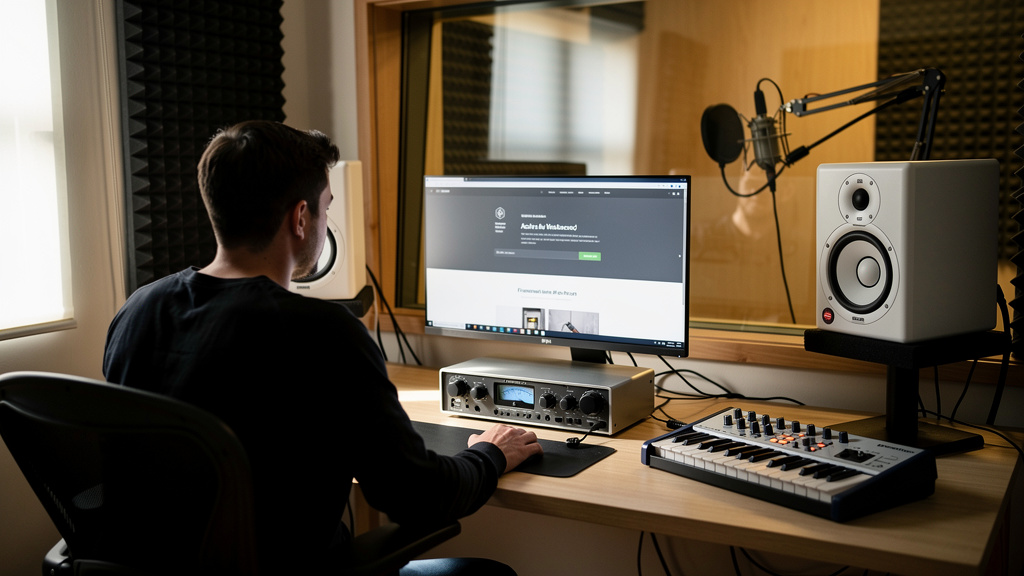
You know the feeling: the room sounds right, the signal chain is solid, the session went great, and still the calendar has weird gaps in it. Good work alone should bring people back and send more people your way. But for a lot of studios, the real problem is simpler and harder to admit: the online first impression does not match the quality of the room.
That disconnect costs more than ego. It creates hesitation. Artists second-guess whether you are active. Podcasters wonder how booking works. Agencies compare you to another studio with a cleaner, clearer site and move on before they ever ask for a rate. A professional website for a creative business is not decoration. It is part of the client experience, part of the sales process, and part of how trust gets built before anyone walks through the door.
A website for a recording studio is part of the session before the session
Most clients do not call first anymore. They research. They open five tabs. They skim your homepage, your room photos, your equipment, your rates, your credits, and your contact flow in about two minutes. In that short window, your site has one job: remove doubt.
A strong website for a recording studio does not try to impress with flashy effects. It answers the quiet questions people ask before they reach out:
- Is this place real and current?
- Do they work with projects like mine?
- What kind of quality can I expect?
- How do I book, and what happens next?
- Will this be easy or annoying?
When those answers are missing, people fill in the blanks themselves, and they usually do it in the least generous way. No rates? Maybe expensive. No clear services? Maybe not a fit. Old photos? Maybe the studio is barely operating. A clumsy contact form? Maybe communication will be just as clumsy once money is involved.
That is why studio website design matters so much for this business specifically. You are not selling a commodity. You are selling taste, reliability, workflow, and confidence under pressure. Your site has to communicate all four.
What a professional studio website actually does for your business
A professional site is not just a nicer brochure. It should actively help you get more studio bookings online, reduce back-and-forth, and improve lead quality. The best studio sites do a few jobs at once.
It filters the right clients in
Clear positioning saves everyone time. If you record full bands, say that. If you specialize in voiceover, podcast production, mixing, or production work, say that. If your room is ideal for writing camps but not 10-piece live tracking, say that too.
Vague websites attract vague inquiries. Specific websites attract clients who already understand what you do well.
It builds trust before the first reply
Professional photography, accurate service pages, session samples, testimonials, and a clean booking process tell people you run a real operation. Not a hobby room. Not a side hustle that may or may not answer by next week. Trust is what turns curiosity into inquiry.
It lowers friction
Every extra step in your process loses people. If someone has to DM you, then email you, then wait for rates, then ask about availability, then guess what to send you, that is too much drag. A website with online booking or at least a clear availability request flow can shorten that path dramatically.
It keeps working when you are in sessions
The studio owner is usually also the engineer, producer, editor, or all of the above. You cannot always answer leads in real time. Your website can. A well-built system can collect project details, qualify leads, send confirmations, and move prospects into an organized follow-up sequence while you are tracking drums or printing mixes.
That is where a done-for-you website for studios starts to become more than a convenience. It becomes operational infrastructure.
The pages every studio should have, and what each one must do
Many studios either overbuild or underbuild. They create too many pages with too little clarity, or they cram everything into one page and hope visitors figure it out. A better approach is to build only the pages that support real buying decisions.
- Home page: State what you do, who it is for, what makes the experience different, and what action to take next.
- Services page: Break out recording, mixing, mastering, podcast production, production, editing, or room rental clearly enough that people can self-select.
- Studio page: Show the room, the vibe, the practical setup, and the kind of sessions it supports.
- Portfolio or samples: Give visitors proof. Audio clips, embedded work examples, or selected credits matter more than generic claims.
- Rates or quote process: You do not always need public pricing, but you do need a transparent next step.
- Booking/contact page: Make it easy to inquire, submit project details, and move forward without confusion.
Notice what is missing: filler. Long gear pages that read like inventory lists rarely close business by themselves. Clients want enough detail to know you are equipped and competent, but they mostly want reassurance that you can deliver the outcome they need.
If you do include equipment, curate it. A focused list of key mics, preamps, monitors, converters, instruments, and software says more than a giant dump of model numbers.
Why DIY websites often stall out
This is not because studio owners are incapable. It is because they are busy, and website work asks for a different skill set than engineering. Good audio people often overthink the wrong details online. They spend hours choosing fonts, writing dense paragraphs about converters, or tweaking image placement while the real conversion problems stay untouched.
The weak points usually look like this:
- Unclear homepage messaging
- No strong call to action
- Outdated photos
- Contact forms that ask too little or too much
- No mobile optimization
- Slow load times
- No follow-up automation after inquiry
- No system for tracking leads
That last point matters more than most studio owners realize. If you do not know where leads came from, which inquiries converted, and who went quiet after the first message, you are flying blind. A CRM and sales funnel website gives you a way to see and improve the entire booking pipeline instead of guessing.
What to fix first if your site is not booking work
You do not need a total rebuild to start making progress. Usually, the first gains come from clarity and flow. Review your site as if you were a first-time client with no context.
- Check your homepage headline. It should immediately say what you offer and for whom.
- Make one primary action obvious. Book a session, request availability, or get a quote. Pick one main path.
- Replace weak photos. Dark phone shots and empty-room images kill confidence fast.
- Add real proof. Testimonials, credits, samples, or case-style project examples help more than adjectives.
- Simplify inquiry. Ask for the essentials: project type, timeline, budget range, and contact details.
- Test mobile first. Many clients will meet you on their phone before they ever open a laptop.
If you serve a local market, there is another practical layer: local SEO for studios. Your site should clearly mention your city, service area, and the kinds of clients you work with in that region. Not stuffed awkwardly into every sentence, just woven in where it is naturally useful. A local artist or brand should be able to tell within seconds that you are relevant to them geographically as well as creatively.
Professional presentation changes how people value your rates
One of the biggest hidden benefits of professional studio website design is pricing confidence. Cheap-looking sites make fair rates feel expensive. Polished sites make fair rates feel expected.
This is not manipulation. It is alignment. If your room, your ears, your process, and your results are professional, your presentation should support that reality. Otherwise, you create friction at the exact moment people are deciding whether your quote feels justified.
Clients do not only buy sound. They buy the feeling that the project is in capable hands.
That feeling starts online now. Often long before they hear a sample or speak with you directly.
When it makes sense to hire a web designer for your studio
If your current site is costing bookings, sitting half-finished, or doing nothing beyond existing, there is a strong case for bringing in help. This is especially true if you want more than a brochure and need an appointment booking website, lead tracking, automated follow-up, and a cleaner path from visitor to paying client.
The right partner should understand both web performance and the way studios actually sell: through trust, proof, responsiveness, and a friction-free booking path. That is different from generic web design services for small business. Creative service businesses need messaging, structure, and systems built around how people choose providers.
For studios that would rather stay focused on sessions than plugins, forms, automations, and page structure, working with a team that builds studio websites around bookings and client flow is often the fastest path to something that finally matches the quality of the room.
A professional website will not fix bad work. But if your work is already good, it stops bad presentation from getting in the way. And for a recording studio, that can be the difference between being admired and being booked.
Comments (0)
Leave a Comment
No comments yet. Be the first to comment!