Why Every Recording Studio Needs a Professional Website
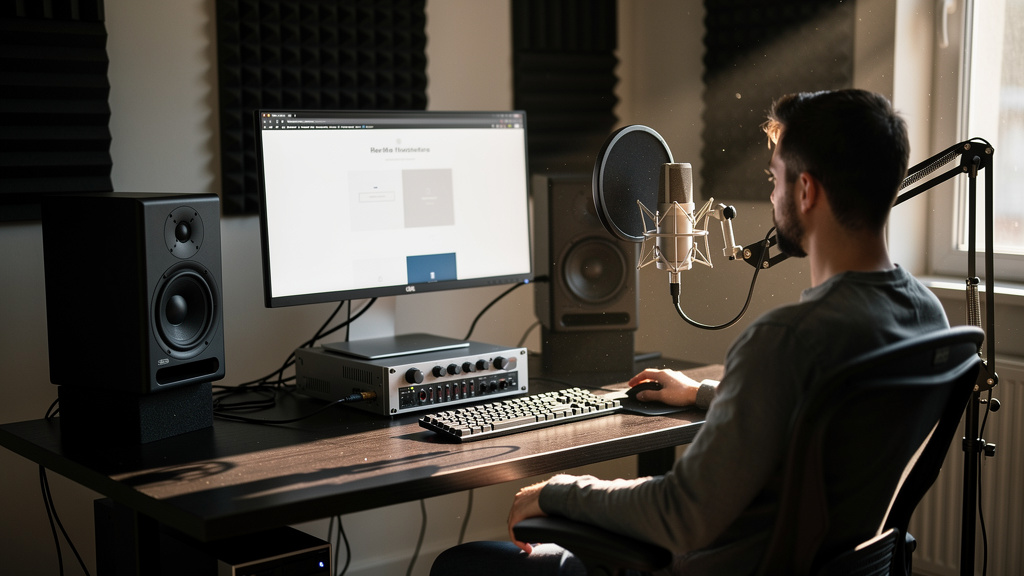
You know the feeling: the room is dialed in, the chain is quiet, the headphone mixes are finally behaving, and the work is good. But the calendar still has odd gaps in it. Referrals come in, people ask for rates on Instagram, somebody says they will book next week, and then nothing happens. For a lot of studios, the weak link is not the sound. It is the way the business shows up online.
A professional website is not just a digital business card. For a recording studio, it is the place where trust gets built, questions get answered, and serious clients decide whether you are the right fit before they ever send a message. If your site is slow, confusing, dated, or missing basic information, people do not call to clarify. They move on.
That matters even more in studio work because clients are not only buying time. They are buying confidence. They want to know what kind of room they are walking into, whether you understand their genre, whether the booking process will be smooth, and whether they can trust you with a project that matters to them.
Your website is part of the studio experience
Studio owners sometimes treat a website like an optional extra, something to tidy up later after the gear list, treatment, and workflow are sorted. In practice, the site is often the first session a client has with you. Before they hear your room, they hear your judgment through your presentation.
A strong website for a recording studio does a few important things at once. It frames your quality level. It reduces uncertainty. It filters out bad-fit inquiries. And it makes it easier for the right client to take the next step.
Think about the questions a new client is silently asking:
- What kind of work does this studio really do well?
- Is the room professional or just a spare bedroom with a mic stand?
- Can I hear examples that match my project?
- How much will this cost, and how does booking work?
- Will this be an organized process or a frustrating one?
If your website answers those questions clearly, you get better inquiries. If it does not, you spend your week DMing rates, explaining basic logistics, and chasing people who were never fully sold in the first place.
What a professional studio website actually does
A good studio site is not mainly about flashy visuals. Good studio website design supports sales. It guides a visitor from curiosity to confidence to action.
For most studios, that means the site needs to do five jobs well.
- Show the room honestly and attractively. Clean photos of the control room, live room, vocal setup, and lounge area help clients picture themselves there. Not every client can assess a mic locker, but they can absolutely feel whether a space looks cared for.
- Explain the services in plain language. Recording, mixing, podcast production, vocal tracking, editing, overdubs, rehearsal capture, production help: spell out what is actually available and who it is for.
- Present credits and samples with context. A playlist with no explanation is weaker than a few strong examples tied to genre, role, and outcome. Tell visitors what you did on the project.
- Remove friction from booking. A website with online booking or a clear inquiry flow saves time on both sides. The easier it is to start, the more likely people are to follow through.
- Build trust before contact. Testimonials, process notes, FAQs, and a visible location all lower resistance and make a first inquiry feel safer.
Notice that none of this depends on having a huge commercial facility. A one-room production studio can benefit just as much as a larger tracking space. Professionalism online is about clarity, confidence, and fit, not square footage.
Why social media is not enough
Social platforms are useful, but they are rented ground. They are built for distraction. Your studio post sits next to memes, clips, ads, and messages from ten other people asking for attention. A website gives you one controlled environment where the client can focus on your work.
Just as important, social profiles are bad at structure. They do not organize rates, services, portfolio, FAQs, booking policy, and contact details in a way that makes decisions easy. They also tend to age badly. A pinned post from eight months ago does not feel like a business system.
A proper site lets you control the path. Someone can land on the homepage, see your room, understand your specialties, hear relevant work, review your process, and submit an inquiry without hunting through old posts.
If you are trying to get more studio bookings online, that control matters. A website is where intent turns into action.
What clients need to see before they book
The best studio websites do not bury the practical stuff. They answer the exact questions a paying client has at the moment they are deciding.
At minimum, your site should make these elements easy to find:
- Location and service area
- Services offered
- Room photos
- Selected portfolio or audio samples
- Rates or at least a clear pricing approach
- Equipment highlights, if relevant to your client base
- Booking or inquiry form
- Policies for deposits, cancellations, revisions, or session minimums
That does not mean turning the site into a wall of information. It means being deliberate. For example, an artist booking vocal sessions may care more about comfort, editing speed, tuning options, and rough mix turnaround than your complete outboard inventory. A podcast client may care more about remote workflow, cleanup, episode delivery, and repeat scheduling. The site should reflect the work you actually want.
This is where many owners benefit from done-for-you website design for studios. It is not just about making pages look polished. It is about structuring the site around real client decisions so the site works like part of the business instead of a forgotten brochure.
A professional website saves time behind the scenes
One of the most overlooked benefits of a professional site is operational. Studio owners often spend too much time repeating the same information in messages: rates, availability, session prep, file delivery, deposits, directions, and basic expectations.
A well-built site can cut that noise dramatically.
When your booking flow is set up properly, the website can collect the right details up front:
- Project type
- Preferred dates
- Session length
- Number of people attending
- Genre or reference material
- Needed services such as editing, mixing, or production help
That gives you better leads and fewer back-and-forth messages. For studios with repeat business, a more advanced setup can tie the site into CRM follow-up, reminders, and inquiry tracking. A strong CRM and sales funnel website is not just for agencies and coaches. It can be extremely useful for creative businesses that rely on timely follow-up and repeat bookings.
Local search still matters more than many studios think
Even when clients hear about you by word of mouth, they usually search your name before reaching out. That search is your audition. If they find a thin website, outdated hours, no room photos, or no clear contact flow, momentum drops immediately.
A professional website also supports local SEO for studios in a practical way. It helps search engines understand what you do, where you are, and which nearby clients should find you. That does not require gimmicks. It requires clear service pages, location signals, consistent business details, and strong on-page copy written around the real work.
This is especially valuable for studios serving a city, region, or niche local market. People search for vocal recording, podcast studios, mixing services, and music production near them every day. A professional website for a creative business gives you a chance to appear when intent is high, not just when somebody happens to see a post.
How to know if your current site is costing you bookings
If you already have a website, the issue may not be whether it exists. The issue may be whether it helps or gets in the way. Run through this quick check:
- Open the site on your phone.
- Start a timer.
- See how long it takes to find your services, location, rates, and contact path.
- Ask whether a first-time visitor can hear relevant work within a minute.
- Ask whether the next step is obvious without scrolling all over the page.
If any of that feels clumsy, a potential client is feeling it too. Studios often lose work through hesitation, not rejection. The client does not dislike the business enough to complain. They just do not get a strong enough signal to proceed.
What to fix first if you want a better website for a recording studio
If your site needs work, start with the parts that affect conversion first, not cosmetic details.
- Clarify the offer. State exactly what you do and for whom.
- Upgrade the imagery. Use clean, current photos that match the quality of the room.
- Simplify the navigation. Keep the main paths obvious: services, portfolio, about, contact, booking.
- Add a stronger inquiry flow. An appointment booking website or structured form beats a generic email link.
- Write better copy. Replace vague claims with specifics about process, outcomes, and client fit.
- Check mobile performance. A large share of your visitors will see the site on a phone first.
Those changes do more for bookings than chasing trendy effects or over-designed pages. Good web design services for small business are really about business function: helping the right people understand, trust, and contact you quickly.
If you would rather spend your time running sessions than wrestling with templates, copy, forms, and integrations, it may be time to hire a web designer for your studio who already understands how creative-service businesses sell. The right partner can build a custom website design for small business use that reflects your room, supports your workflow, and brings in cleaner inquiries without adding more admin to your week.
The short version is simple: a professional website is not separate from your studio. It is part of the signal chain. It shapes first impressions, removes friction, and helps serious clients commit. When it is built well, it does not just make you look established. It makes the whole business run better.
Comments (0)
Leave a Comment
No comments yet. Be the first to comment!