Why Expensive Cables Won’t Fix a Bad Studio Signal Path
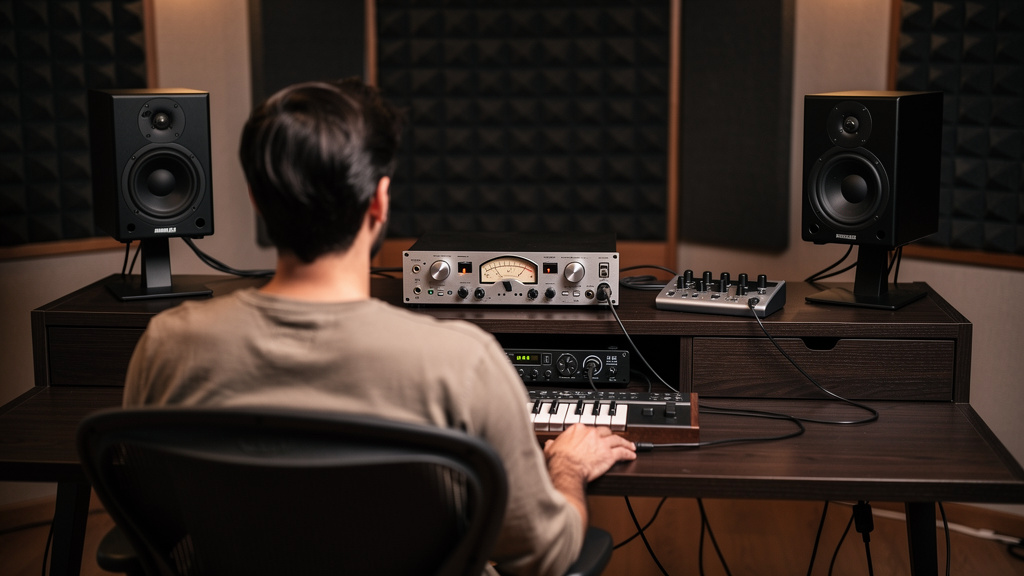
You know the feeling: you spent real money on a good interface, decent monitors, maybe even a serious outboard piece or two, and somehow the studio still feels smaller than it should. The mix sounds a little pinched. Quiet passages seem less quiet. A synth line that felt wide in headphones comes back with a faint buzz or a papery edge once it hits the speakers. So you start looking at cables, and the market happily tells you the answer is “better” metal.
That is where a lot of smart studio owners get dragged sideways. Not because cables do not matter, but because they matter in a much less glamorous way than the packaging suggests. Most noise problems tied to cabling are not about gold plating, boutique metallurgy, or a luxury jacket. They are about whether the connection is balanced or unbalanced, how far that signal has to travel, and whether your grounding and shielding choices are helping or hurting the system.
The good news is that this is usually fixable. When the signal path is right, the room feels calmer. Your dynamic range opens back up. Reverbs sit where they should. Low-level details stop fighting a layer of junk riding underneath them. You do not need magic. You need signal integrity.
What balanced cabling actually buys you
Balanced lines are not “higher quality” in the abstract. They are designed to reject noise picked up along the cable run. That is a very specific job, and in a studio full of power supplies, computer gear, LED lighting, USB devices, and wall power, it is a big one.
A balanced connection carries the audio on two conductors with opposite polarity, plus a shield. At the receiving end, the input compares those two conductors. Any interference that got induced equally into both conductors along the way is treated as common noise and canceled out. That is the practical magic of balanced audio: not better tone by itself, but much better resistance to environmental garbage.
In real rooms, that matters most on the connections you depend on every day:
- Interface outputs to monitor controller or monitors
- Mic preamps to converters
- Outboard sends and returns
- Long runs from live room to control room
- Patch points feeding balanced gear
If both pieces of gear support balanced I/O, using a proper balanced cable is usually the cleanest option. That often means XLR to XLR, or TRS to TRS, or sometimes XLR to TRS depending on the gear. The connector shape is not the deciding factor by itself. The wiring standard behind it is.
XLR vs TRS: same principle, different form factor
One of the most persistent sources of confusion is assuming XLR is inherently more professional than quarter-inch TRS. In many studio applications, they can carry the same kind of balanced analog signal. An XLR cable and a TRS cable can both be fully balanced. The difference is usually mechanical format and what the manufacturer chose for the panel.
That matters because people often replace a working TRS run with an expensive XLR-based workaround, hoping the connector itself will improve the sound. It will not. What matters is whether the sending output is balanced, whether the receiving input is balanced, and whether the cable is wired correctly for that relationship.
Think about it this way:
- XLR: commonly used for microphones and balanced line connections
- TRS: can carry balanced mono line-level audio, or unbalanced stereo headphone signals, depending on the application
- TS: typically unbalanced mono
- RCA: typically unbalanced consumer-level connections
That middle point is where people get burned. TRS is not automatically balanced in every context. A headphone jack is TRS too, but that does not make it a balanced mono line output. The connector alone never tells the whole story. The gear’s design does.
Why unbalanced runs shrink your margin for error
Unbalanced connections can work perfectly well when the run is short and the electrical environment is friendly. Plenty of instruments and some hardware outputs are unbalanced by design. The problem starts when those signals are asked to travel farther than they should, or when they are routed near power bricks, wall cables, computer displays, chargers, or lighting supplies.
An unbalanced line has much less ability to reject induced interference. The shield often has to do double duty as both signal reference and protective screen, which makes the connection more vulnerable. That vulnerability can show up as obvious hum, but it also shows up in subtler ways: a low haze, brittle top end, inconsistent stereo image, or a noise floor that keeps you from hearing the tails and spaces you paid for.
This is where expensive cable marketing gets traction. You hear the problem, swap in a nicer-looking cable, and maybe the fit is tighter or the shielding is a bit better, so the symptom shifts. But if the real issue is that you are trying to run an unbalanced synth output across the room into a setup with multiple ground references, you have not solved the root cause. You have polished around it.
If this sounds familiar, this interactive noise-elimination workbook is useful precisely because it helps you trace the logic of the signal path instead of guessing from forum fragments.
The gold-plated myth survives because it sounds plausible
Gold plating does have a legitimate purpose. It resists corrosion well, and on connectors that are plugged and unplugged regularly, that can help maintain reliable contact over time. What it does not do is lower your studio noise floor by itself, widen your stereo field, or turn an unbalanced mess into a robust signal path.
If a cable ad implies that plating is the main thing standing between you and silence, take a step back. A noisy studio line is far more likely to be caused by one of these conditions:
- A balanced output feeding an unbalanced input incorrectly
- An unbalanced source running too far
- Multiple devices grounded through different paths
- Shield connections interacting badly between gear pieces
- Power and audio sharing poor physical routing
- Adapters that defeat the intended wiring of the connection
Gold can help a connector stay clean and reliable. It cannot perform common-mode noise rejection. It cannot break a ground loop. It cannot rewrite the output stage of your synth or sampler.
Ground loops are often the real villain
When two connected devices each have their own path to ground, a small voltage difference can exist between them. Connect them with audio cabling, and now current has another path to travel. That is the beginning of many hum problems. You hear the symptom at the speakers, but the cause is the relationship between equipment grounds.
This is why a studio can behave perfectly with headphones, then start humming the moment monitors, outboard, or a USB-connected computer enters the chain. Nothing is “wrong” in the dramatic sense. The system simply created a loop.
Balanced connections can help reduce the audibility of this problem, but they are not a cure-all when the grounding picture is bad. And random adapter chains can make it worse fast. The moment you start going from XLR to RCA to TS to some lift adapter you found in a drawer, you are no longer managing a clean signal path. You are negotiating with it.
How to think about cable runs like an engineer
If you want a cleaner room, stop asking which cable is fanciest and start asking what each run is being asked to do. A practical way to think about it is to sort each connection by source type, destination type, and distance.
- Identify whether the source is balanced or unbalanced. A manual or rear-panel labeling usually tells you more than the connector shape.
- Check whether the destination expects balanced or unbalanced input. Mismatches matter more than brand names.
- Notice the run length. The longer the run, the less forgiving an unbalanced connection becomes.
- Look at the physical route. Audio passing near power supplies and mains wiring has a harder job.
- Watch for unnecessary format changes. Every adapter and conversion is another opportunity to defeat proper wiring.
That thought process is where studios get quieter. Not from chasing luxury cable claims, but from matching the line type to the job.
Where studio owners usually lose signal integrity
The weak points are rarely dramatic. They are ordinary decisions made one cable at a time. A desktop synth gets connected with the first lead available. Monitor cables run parallel to AC power because the furniture makes it convenient. An interface with balanced outputs feeds powered speakers through TS leads because they were already in the drawer. A nice compressor is patched through a mess of mixed standards. Nothing seems catastrophic, but the whole room becomes less stable.
When that happens, you are not just fighting obvious noise. You are giving up headroom and clarity. The studio feels less trustworthy. You make EQ moves to compensate for what is partly a wiring problem. You print around interference. You second-guess the converter, the plugin, the mic, the monitors, when the signal path underneath them is the thing asking for attention.
That is why balanced vs unbalanced cabling is not a dry technical topic. It changes how confidently you work.
What to do next without wasting money
If you are staring at a room full of mixed cables and half-known signal paths, resist the urge to solve it by shopping first. Premium cables have their place when the underlying design is already right. They are not a substitute for that design.
Start by understanding which connections in your room truly need balanced runs, where unbalanced sources need special care, and where shield and ground relationships may be working against you. Once you see that map, buying decisions get simpler and cheaper.
For studio owners who want a structured way to sort that out, I recommend Kill the Noise. It is a solid resource for working through source-level noise problems visually, especially when conflicting advice has made the whole subject feel murkier than it needs to be.
Comments (0)
Leave a Comment
No comments yet. Be the first to comment!