Why Production Businesses Lose Clients Without a Proper Website
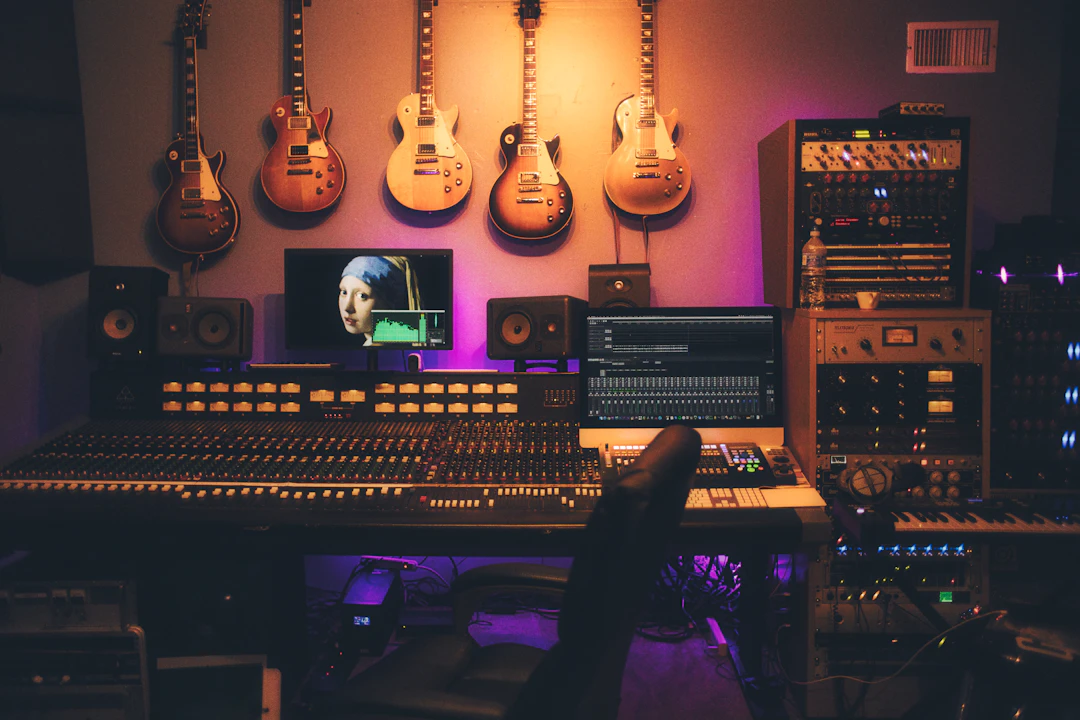
You know the feeling: the inquiry finally comes in, the prospect sounds promising, and then they go quiet. No call booked. No follow-up. No deposit. A lot of production businesses assume the client found someone cheaper, or just changed plans. Sometimes that happens. But very often, they looked you up, landed on a weak web presence, and lost confidence before you ever had a chance to prove how good your work is.
That stings because your actual service might be excellent. Your mixes hit, your sessions run smoothly, your edits are clean, and your client experience in the room is solid. But online, the signals can say something else entirely: hard to contact, unclear pricing, no process, no proof, no professionalism. For a client spending real money on recording, post, podcasts, video production, or content work, those signals matter.
A proper website is not about vanity. It is not about having a prettier homepage than the next studio. It is about removing doubt at the exact moment a buyer is deciding whether to trust you with their project, budget, and timeline.
Your website is handling sales calls you never hear
Most production owners think of their website as a brochure. Clients do not. They use it like a screening tool. Before they send an inquiry, they are listening for the business equivalent of noise floor: confusion, friction, and missing information.
When a prospect lands on a weak site, a few questions hit immediately.
- What do these people actually do well?
- Are they active, professional, and current?
- Can they handle my kind of project?
- How do I book, ask questions, or move forward?
- Will working with them be smooth or chaotic?
If your site does not answer those quickly, many prospects will not ask for clarification. They will simply bounce and move on to the next option.
This is especially true for clients who are not hobbyists. Agencies, brands, serious artists, podcast teams, and commercial clients do not want to decode your business from scattered social posts. They want a clear process and a clean path.
Why referrals are not enough anymore
Referrals still matter. They are one of the best lead sources in production. But even warm referrals do homework. A friend may say, “Talk to this producer” or “This studio is great,” but the prospect still goes searching. What they find either confirms the recommendation or weakens it.
A proper professional website for a creative business acts like a confidence multiplier for referrals. It backs up word of mouth with proof: polished work samples, service clarity, testimonials, FAQs, room details, booking flow, and a real business presence.
Without that support, even referred leads can hesitate. They may wonder whether you are booked consistently, whether your setup is current, or whether communication will be a mess. None of those doubts have anything to do with your talent. They come from presentation.
The quiet ways a weak site drives clients away
Most lost bookings do not come from one dramatic mistake. They come from a stack of small frictions that make your business feel harder to buy from.
1. Your services are too vague
“Audio services” is not enough. “Production” is not enough. Clients need to know whether you handle vocal recording, mixing, mastering, podcast editing, ADR, beat production, content audio cleanup, live session capture, or studio rental. If they cannot quickly map your offer to their problem, they leave.
2. Your work is hard to evaluate
If your portfolio is buried, outdated, or random, prospects cannot hear themselves in it. A proper website for a recording studio should organize proof by service type or client type so visitors can find relevant examples fast.
3. Your contact path creates friction
If booking means “DM me on Instagram” or “send an email and I’ll get back when I can,” you are leaking serious business. High-intent leads want an obvious next step. A website with online booking or structured inquiry form reduces drop-off because it turns vague interest into action while motivation is still high.
4. Your site does not answer practical concerns
Clients want basics: location, turnaround time, revision policy, room photos, gear highlights, session types, remote workflow, and what happens after inquiry. If they have to ask every foundational question manually, the sale gets heavier than it needs to be.
5. Your business feels inactive
An old copyright date, broken links, dead portfolio embeds, or a homepage talking about 2021 sends a message, whether you mean it or not. It says the business may be neglected. In production, where reliability is everything, that is enough to lose trust.
What a proper studio website actually needs
This is where many owners overcomplicate things. You do not need fifty pages. You need the right pages doing the right jobs. Strong studio website design is less about volume and more about flow.
At minimum, your site should help a first-time visitor do these things in order:
- Understand what you offer within seconds.
- See who it is for and what kinds of projects you handle.
- Hear or view proof of quality.
- Trust the business behind the work.
- Take a clear next step without confusion.
That usually means a homepage with a sharp positioning statement, service pages that speak plainly, a portfolio that is easy to browse, an about page that builds confidence, and an inquiry or booking system that feels simple.
For many businesses, this is where a done-for-you website for your production business starts making financial sense. Not because owners cannot build pages, but because structure, messaging, conversion flow, and automation are what turn visits into booked work.
How to get more studio bookings online without sounding salesy
A lot of creatives are allergic to marketing language, and honestly, fair enough. The answer is not to become pushy. The answer is to become clear.
If you want to get more studio bookings online, your site should speak like a competent operator, not a hype machine. That means specific offers, realistic timelines, proof, and a strong process.
Here is the practical sequence I recommend:
- Define your primary revenue services. Do not try to lead with everything. Pick the services that actually drive profit.
- Build one page per core service. Each page should explain who it is for, what is included, common use cases, and how to start.
- Show targeted proof. Match examples and testimonials to the service being viewed.
- Add a single strong call to action. Book a consult, request a session, or submit a project brief. Keep it consistent.
- Reduce back-and-forth. Use an appointment booking website flow or structured intake form so leads arrive pre-qualified.
This matters because clients do not buy “websites.” They buy confidence and momentum. A site that answers their questions and guides them forward wins more often than one that simply looks creative.
Serious clients want systems, not just style
One of the biggest differences between a hobby operation and a mature business is what happens after the inquiry. If your site stops at a contact form, you are still doing a lot of manual work that slows down the sale.
For production companies and studios, stronger websites now often include things like:
- online session requests
- discovery call scheduling
- lead capture tied to follow-up emails
- project intake forms
- client pipeline tracking
- automated reminders and next steps
That is where a CRM and sales funnel website becomes useful. Not because you want to act like a giant corporation, but because missed follow-ups and messy inboxes cost real money. Good systems protect your time and make the client experience smoother.
If you handle multiple services, remote work, or recurring client relationships, this is often the point where basic DIY pages start showing their limits.
A proper website also protects pricing
When your web presence is weak, buyers compare you on the easiest variable left: price. They cannot clearly see your process, reliability, specialization, or client experience, so they default to rates.
A stronger site gives context that supports healthier pricing. It shows that you are organized, experienced, and prepared. It communicates that clients are not just paying for hours in a room. They are paying for outcomes, workflow, and confidence that the job will be handled properly.
That does not mean hiding your rates or writing long sales copy. It means presenting your business like it understands the stakes of the project.
The right website does not convince everyone to hire you. It helps the right clients stop hesitating.
What to fix first if your site is costing you work
If you suspect your current site is leaking leads, start with the parts closest to revenue.
- Rewrite your homepage headline so it clearly states what you do and for whom.
- Make your main services visible in the top navigation.
- Replace generic contact language with one primary action.
- Add recent, relevant work samples.
- Answer common buying questions before the inquiry stage.
- Test your site on mobile and simplify anything that feels slow or awkward.
You do not need endless redesign cycles to make progress. You need clarity, trust signals, and a path to action.
And if you are at the stage where patching things together is taking more time than it is worth, it may be smarter to hire a web designer for your studio who understands how creative-service businesses actually sell. The best builds combine positioning, booking flow, automation, and a client-friendly experience instead of just giving you nicer colors and fonts.
Your production business can be excellent and still lose work online. That is the hard truth. The good news is that this problem is usually fixable. When your website reflects the quality of your real operation, more of the right prospects make it past that silent evaluation stage and into an actual conversation.
Comments (0)
Leave a Comment
No comments yet. Be the first to comment!