Why Production Businesses Lose Clients Without a Proper Website
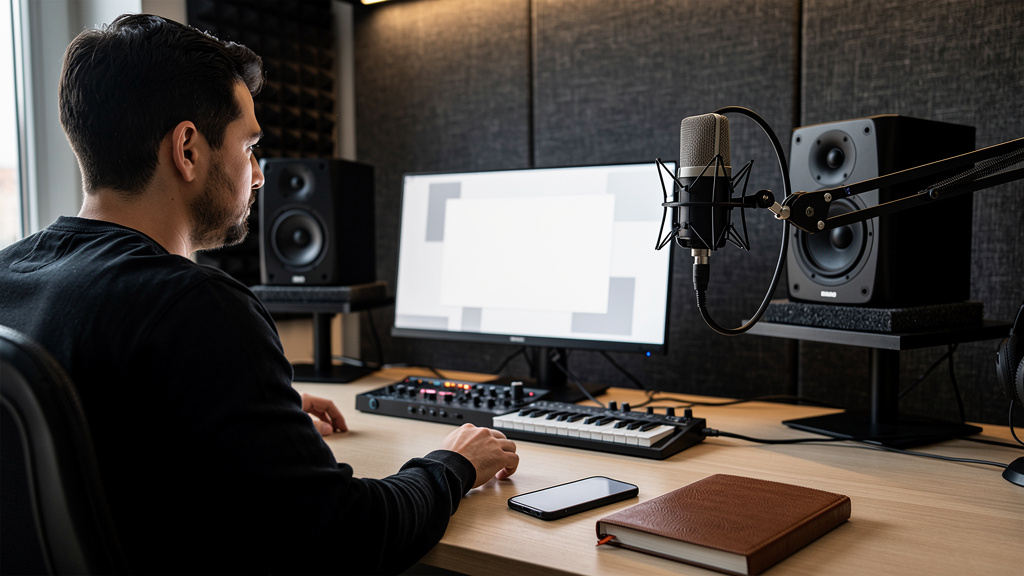
You know the feeling: the reel is solid, the work speaks for itself, referrals are decent, and still the calendar has weird gaps you can’t explain. One week you’re fielding inquiries from people who sound ready to book. The next week it’s silence, or worse, messages from prospects who vanish after asking for rates. For a lot of production businesses, that drop-off isn’t about talent, pricing, or even competition. It’s the website quietly leaking trust before a conversation ever starts.
That’s the uncomfortable part. Most owners assume clients hire on portfolio alone. In reality, buyers use your site to answer a more practical question: Can I trust this person to run a smooth project? If the answer feels blurry, people keep shopping.
Your website is being judged like your session workflow
Clients don’t separate your creative skill from your business presentation as neatly as owners do. If your mixes are polished but your site loads slowly, looks dated, hides pricing cues, or makes it hard to inquire, people read that the same way they’d read a poorly labeled session file or a messy handoff.
Production clients are buying risk reduction. They want confidence that deadlines will be met, revisions will be handled clearly, and communication won’t become a project of its own. A proper professional website for a creative business signals organization before you ever get on a call.
That matters whether you run a recording studio, podcast production house, video post team, or freelance production brand. A website for a recording studio isn’t just there to prove you exist. It has to answer the objections that stop bookings:
- What do you actually do?
- Who are you best for?
- What does the process feel like?
- What does working with you cost at a high level?
- How do I take the next step right now?
If any of those answers are missing or buried, your site creates friction. And friction costs clients.
Where production businesses lose people on the site
Most client loss happens in a handful of predictable places. Not dramatic failures—small doubts that stack up until the visitor leaves.
1. The homepage talks about the business, not the client
Many sites lead with vague language: “high-quality production solutions,” “creative excellence,” “full-service media.” That tells a visitor almost nothing. A prospect should know within seconds whether you help artists track records, help podcasters sound broadcast-ready, or help brands produce polished voiceover and content assets.
Specificity beats cleverness. The clearer your offer, the easier it is for the right client to say, “Yes, this is for me.”
2. The portfolio has no context
Strong samples matter, but examples without explanation don’t do enough selling. Clients want to know what problem you solved, what kind of client it was for, and what role you played. Did you record, edit, mix, produce, restore, or manage the whole delivery pipeline?
A reel alone impresses peers. Context closes clients.
3. There’s no obvious path to inquire or book
If a visitor has to hunt for your contact page, wait days for a reply, or send a vague form into the void, many won’t bother. A website with online booking or at least a simple guided inquiry flow removes hesitation. People act when momentum is high. If your site doesn’t support that moment, you lose it.
4. The site doesn’t answer operational questions
Creative buyers are often comparing three or four options at once. They’re not only evaluating style. They’re checking whether your process fits their project. Turnaround, revision policy, session types, remote workflow, file delivery, and onboarding all matter. When your website leaves those details unanswered, the safer choice becomes the competitor who explained things clearly.
5. The business feels invisible locally
If you serve a city or region, weak location signals can cost you serious work. Many owners think local discovery comes down to social media or a map listing. It doesn’t. Your site still needs pages and copy that support local SEO for studios, especially if people search for recording, podcast, voiceover, or production help near them.
When local relevance is thin, you miss people who are ready to buy now.
What a proper studio website design needs to do
A good production site doesn’t need to be huge. It needs to remove doubt in the right order. That’s a very different goal from simply “having a website.” Effective studio website design behaves more like a front-end producer: it sets expectations, keeps the project moving, and gets the right information in the right place.
At minimum, your site should do these jobs well:
- State the core offer fast. Within the first screen, tell visitors what you do, who you do it for, and what they should do next.
- Show proof that matches the offer. Use relevant samples, testimonials, client results, and process notes that fit your actual market.
- Reduce uncertainty. Explain how projects start, how sessions run, what clients receive, and how communication works.
- Capture intent immediately. Give people a strong inquiry path, scheduling option, or consultation request while they’re interested.
- Support follow-up. Not everyone books on visit one. Your site should help you keep the conversation going.
That last point is where many production businesses fall short. A site should not just sit there like a digital brochure. The stronger setups behave like a real sales system. An done-for-you website built for client booking can tie together inquiry forms, automated follow-up, and lead tracking so prospects don’t disappear after first contact.
How to tell if your current site is costing you work
If you’re unsure whether the website is the issue, don’t guess. Audit it the same way you’d troubleshoot a signal chain: follow the path and find the point where confidence drops.
Walk through these steps from a new client’s perspective:
- Land on the homepage cold. In five seconds, can you tell what service is offered, who it’s for, and where to go next?
- Try to evaluate fit. Can a visitor quickly find examples, service descriptions, and enough detail to compare you with alternatives?
- Try to take action. Is there a clear inquiry or scheduling option on every key page?
- Check mobile behavior. Most prospects will visit from a phone first. If the site feels clumsy there, trust drops fast.
- Measure response flow. What happens after a form is submitted? Does the visitor get a thoughtful reply, next steps, or dead silence?
If any step feels slow, vague, or inconvenient, that’s likely where bookings are being lost. Not because people are impatient, but because uncertainty multiplies online. A site that leaves questions open makes the buyer do extra work, and extra work sends them elsewhere.
Clients don’t just need information. They need momentum.
One of the biggest differences between underperforming sites and high-converting ones is momentum. A good site moves people from interest to action without making them pause and wonder what happens next.
That can be as simple as offering:
- a short project inquiry form tailored to your services
- an appointment booking website flow for consultations or studio tours
- automatic confirmation and follow-up emails
- clear service pages for each revenue stream
- light qualification questions so you spend time on better-fit leads
For owners juggling sessions, editing, revisions, and admin, that system matters as much as the design itself. This is why more creative businesses are moving beyond brochure sites toward a CRM and sales funnel website setup that tracks leads and helps them progress instead of going cold.
When you get more studio bookings online, it usually isn’t because the site looks fancier. It’s because the site makes buying easier.
When DIY stops being efficient
There’s nothing wrong with building your own site at first. For many businesses, that’s a practical way to get started. But there comes a point where patching pages, fighting templates, and duct-taping forms together starts costing more than it saves.
If your business has outgrown the “good enough” stage, the issue isn’t vanity. It’s capacity. You need a site that reflects your current level, supports your sales process, and doesn’t require constant troubleshooting between sessions.
That’s when it makes sense to hire a web designer for your studio or production business—especially one who understands how creative service companies actually win clients. Generic web design services for small business often miss the details that matter here: portfolio structure, inquiry flow, online scheduling, local search visibility, and nurturing leads after they reach out.
The better fit is usually custom website design for small business built around your real booking path, not a template with your logo dropped in.
The real cost of an inadequate website
The obvious cost is missed inquiries. The less obvious cost is the kind of inquiries you attract. Weak websites tend to bring in more price shoppers, more poor-fit projects, and more repetitive back-and-forth because the site didn’t pre-qualify anyone.
A stronger site does the opposite. It attracts better-matched clients, frames your value earlier, and saves time by answering the questions you keep repeating manually.
That changes the whole rhythm of the business. Fewer dead-end leads. More serious inquiries. More confidence on both sides before the first call.
If your production company or studio is ready for that shift, AleXavior builds professional studio websites that turn inquiries into booked projects with booking, CRM, and follow-up systems already thought through. If you’d rather spend your time producing than wrestling with site structure, that’s the kind of upgrade that pays for itself quietly and repeatedly.
Comments (0)
Leave a Comment
No comments yet. Be the first to comment!