Your Cable Isn’t Premium Enough—Your Signal Path Is Wrong
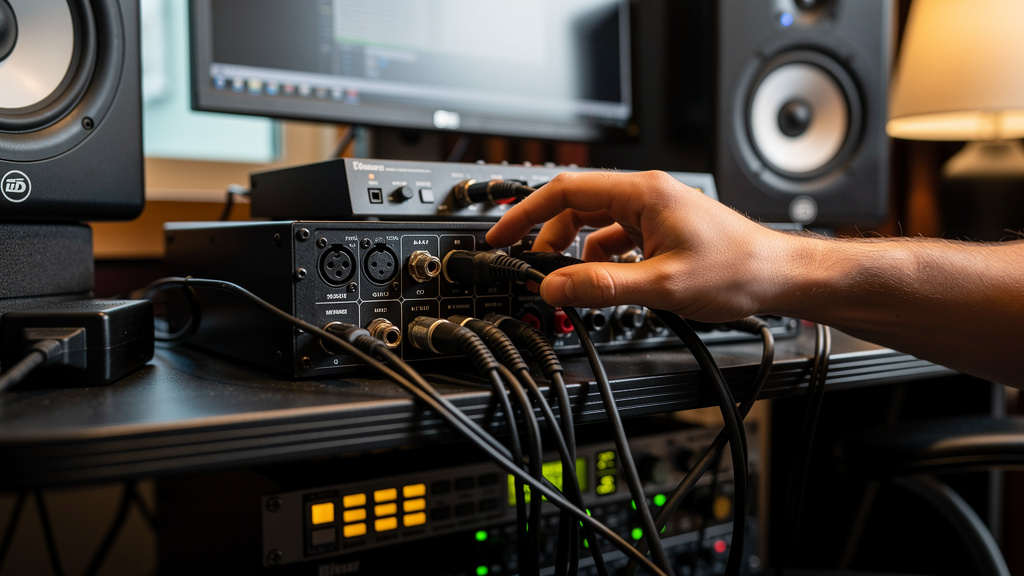
You upgrade the interface, buy the nice monitors, swap in expensive cables, and somehow the mix still feels a little smaller than it should. Not broken, just compromised. A faint haze in the background. A brittle edge when the level comes up. Maybe a hum that appears only when everything is connected exactly the way you need it for work. That kind of problem is maddening because it makes good gear feel untrustworthy, and it steals confidence from every decision you make.
The hard truth is that a lot of studios are not fighting a “quality” problem. They are fighting a signal-path problem. And that is good news, because signal-path problems are usually fixable once you stop judging cables by price tag and start judging them by how they carry audio and how their grounds behave.
Why expensive cables often disappoint
There is a persistent myth in audio that gold plating, luxury branding, or a heavier cable jacket somehow lowers your noise floor on its own. It does not. Gold plating can help connector surfaces resist corrosion over time, which matters in some environments, but it does not magically remove hum, reject interference, or make an unbalanced run behave like a balanced one.
What actually determines whether a cable run stays clean is more fundamental:
- Whether the connection is balanced or unbalanced
- How long the cable run is
- How the shield is tied into ground
- What the cable is routed near
- Whether the gear on both ends is wired in a compatible way
If any one of those is wrong, a pricey connector finish will not save you. You are not buying silence. You are building it by making the signal path resistant to noise in the first place.
Balanced is not “better.” It is better at surviving the room.
A balanced connection does not sound more expensive or more musical by default. Its job is simpler and more important: carry the wanted audio while making the cable run less vulnerable to interference picked up on the way.
In plain studio terms, a balanced line usually uses three conductors: hot, cold, and shield. The receiving input compares hot and cold, and noise that got induced equally into both lines is largely rejected. That is the whole magic. Not fairy dust, just common-mode noise rejection doing its job.
An unbalanced line usually uses two conductors: signal and shield. That shield is now doing double duty as both shield and return path, which makes the connection more exposed to ground-related trouble and environmental noise.
This is why two rigs with the same converters can behave very differently. One has a robust balanced path from interface to monitor controller to speakers. The other has adapters, mismatched outputs, a long unbalanced run under a power strip, and one device quietly referencing ground in a way the owner never thought about.
When people say a studio “sounds cleaner,” they often mean the signal path is rejecting trouble before it reaches the speakers.
XLR vs TRS: the connector is not the whole story
This is where many setups go sideways. XLR and TRS can both carry balanced audio. TS usually carries unbalanced audio. But the connector shape alone does not tell you the whole electrical story.
You can have:
- XLR carrying a balanced line-level signal
- TRS carrying a balanced line-level signal
- TRS carrying a stereo headphone feed
- TS carrying an unbalanced instrument or line signal
- An output that looks balanced physically but is impedance-balanced or servo-balanced electrically
That last point matters more than people think. Some gear is designed so the output stage remains happy when connected to different kinds of inputs. Other gear is less forgiving, and odd cabling choices can reduce level, raise noise, or create a weak, pinched sound that people wrongly blame on converters or speakers.
If your interface has balanced TRS outputs and your monitors accept XLR, that is usually fine. A proper balanced TRS-to-XLR cable can be completely appropriate. The issue is not whether XLR is somehow more “pro” than TRS. The issue is whether the source, destination, and cable wiring all agree on how the signal and shield should be handled.
Where thinness comes from when the gear should sound full
Noise gets the attention because you can hear it between notes. But a bad cable strategy can also make your actual program material feel smaller. Not always dramatically. Sometimes just enough to make you keep boosting top end, adding compression, or second-guessing your low mids.
That thinness can come from a few different causes:
- Partial cancellation from miswired balanced lines. If hot and cold are handled incorrectly, your receiving stage may not reconstruct the signal as intended.
- Level mismatch between outputs and inputs. A connection that is technically passing audio may still not be passing it at the right operating level.
- Shield-related contamination. Garbage on the line can mask depth and detail even before it becomes obvious buzz.
- Compromised unbalanced runs. Longer runs in noisy environments can make the audio feel grainy or less stable, especially around powered gear and lighting.
This is why some “fixes” seem to work but never fully satisfy. You can gate a noisy track, notch out some hum, or move a cable slightly and hear an improvement. But if the signal path itself is vulnerable, the problem has not really left. It has just changed shape.
Cable length is not a moral issue. It is an exposure issue.
People often ask for a safe maximum cable length as if there is one magical number. In reality, length becomes a problem when it increases your exposure to the electrical mess around the cable run.
A short unbalanced cable from a guitar to a nearby DI can be perfectly normal. A long unbalanced line from interface to monitors across a room full of power supplies is asking for trouble. Balanced lines are more forgiving over distance because they are designed to reject noise picked up along the route.
What matters is not just distance, but context:
- Are audio runs crossing AC cables?
- Are they bundled with power instead of separated from it?
- Are they passing wall warts, LED supplies, chargers, routers, dimmers, or computer bricks?
- Are they feeding powered speakers that reference ground differently from the interface?
A cable run is part of the system, not a neutral accessory. The room and the electrical environment become part of the audio result.
Shield mismatches are where “mystery noise” likes to live
Shields are often misunderstood because they seem passive. They are not exciting, but they are critical. A shield can help block interference, provide a reference, and interact with chassis ground in ways that either keep the system quiet or create a path for noise current.
The moment you connect multiple powered devices together, you are no longer just moving audio. You are connecting grounding relationships. If those relationships are poorly matched, the shield may end up carrying current you never intended, and that is where hum and buzz can enter the picture.
This is one reason internet advice gets so messy. One person says, “Lift the shield.” Another says, “Never lift the shield.” Someone else recommends a boutique cable brand. All of them may be describing a situation that happened to work in their exact rig, while your studio is wired differently.
If you want a clearer visual way to think through those interactions, this noise-elimination workbook is built around tracing the source instead of swapping random fixes until one appears to help.
What to verify before blaming your interface
Before you decide your converters are noisy or your monitors are flawed, check the logic of the path. Not every problem needs a dramatic teardown. Often the biggest gains come from confirming a few foundational things in order.
- Identify each output and input type. Know whether each connection point is balanced, unbalanced, or conditionally balanced.
- Match the cable to the circuit, not just the connector. A plug that fits is not proof that the wiring is correct for the job.
- Reduce unnecessary adapters. Every improvised conversion is a chance to confuse signal and shield behavior.
- Keep vulnerable runs short. Especially unbalanced runs leaving line-level gear.
- Separate audio from power where possible. Crossing at right angles is usually kinder than running side by side for long distances.
Those checks matter because they reveal whether the system is fundamentally sound. If the path is right, then evaluating gear becomes meaningful. If the path is wrong, every listening impression is contaminated by the wiring itself.
The real upgrade is confidence
When a studio’s cabling is sorted properly, the first thing you notice is not always “wow, more treble” or “bigger bass.” It is trust. Faders behave predictably. Quiet passages stay quiet. Stereo imaging stops shifting in subtle ways. You stop wondering whether the harshness is in the vocal chain or in the line feeding the monitors. That confidence is what restores dynamic range in practice, because you are no longer spending headroom and attention fighting preventable garbage.
And that is the part the gold-plated-cable myth misses completely. Clean audio is not a luxury finish. It is the result of correct balancing, sane cable runs, and ground relationships that are working with you instead of against you.
If your setup sounds more expensive than it behaves, spend some time with Kill the Noise. It is a solid resource for studio owners who want to understand where the interference really starts and how to stop chasing the wrong culprit.
Comments (0)
Leave a Comment
No comments yet. Be the first to comment!