Your Studio Sounds Pro. Your Website Should Too.
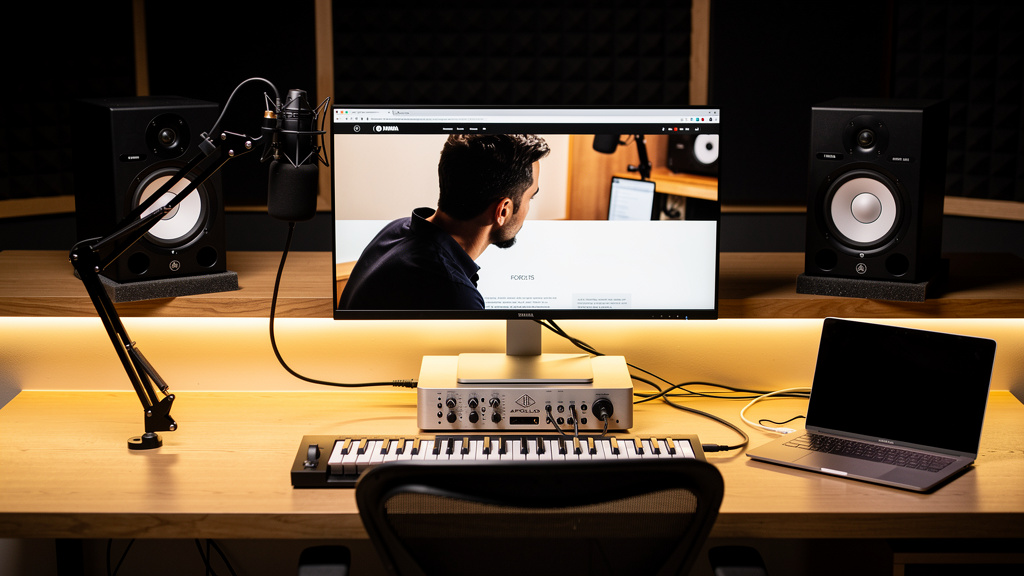
You know the feeling: someone hears your work, likes your room, asks for your rates, and then goes quiet. Not because your recordings are weak, but because the business side felt uncertain. They searched your studio name, found a thin site, an old Instagram bio, or nothing clear at all, and suddenly the confidence dropped. In this business, people are not only booking your microphones and monitors. They are booking trust, reliability, taste, and momentum.
That is why a professional website matters so much for a recording studio. It is not decoration. It is part of the signal path of your business. Before a client hears your room tone, they hear your credibility.
Your website is your first session with the client
Most prospects decide very quickly whether your studio feels organized, current, and worth the rate. If your online presence is confusing, slow, thin on detail, or visually inconsistent, they start making assumptions that spill into everything else: scheduling, communication, file delivery, revisions, even whether you will show up prepared.
A strong website for a recording studio answers the quiet questions clients have before they ever send an inquiry:
- What kind of work happens here?
- Is this studio right for my genre, format, or project size?
- Does the owner run a serious operation?
- How do I book, and what happens next?
- Can I trust this person with my time, money, and material?
The point is not to impress people with flashy design tricks. The point is to remove friction. Good studio website design makes the next step feel obvious and safe.
A professional website filters better clients, not just more traffic
One of the biggest mistakes studio owners make is treating a site like a brochure. A good site should act more like an assistant engineer who knows how to prep the room before the client arrives.
When your pages clearly describe your services, process, room, gear philosophy, turnaround, and ideal project types, you stop attracting the wrong inquiries. You spend less time answering vague messages from people who are shopping on price alone or expecting services you do not actually offer.
That filtering matters. If your studio handles full-band tracking, mixing, podcast production, voiceover, or production work, each of those clients wants different signals that they are in the right place. A professional website for a creative business helps them self-select.
That means fewer dead-end calls and more conversations with people who already understand your value.
What a studio website needs to do in practical terms
A professional site should support the actual way a modern studio sells and operates. It has to do more than sit there looking clean.
At minimum, your site should handle these jobs well:
- Show what you do clearly. Do not make visitors decode vague branding. Say whether you offer recording, mixing, mastering, podcast production, vocal sessions, editing, production, or studio rental.
- Show proof. Include real work samples, client results, room photos, and a short explanation of how you approach sessions.
- Explain the booking path. Tell people how inquiries work, what information you need, what happens after they reach out, and whether deposits are required.
- Make contact easy. A clear contact form, phone option, and direct next step outperform a cluttered page every time.
- Work properly on mobile. Many bookings start on a phone between rehearsals, commutes, or late-night searches.
If you want to get more studio bookings online, these basics matter more than trendy effects or giant gear lists.
Why DIY often breaks down for studios
Many studio owners can build a page. That is not the hard part. The hard part is building a site that speaks to the right client, ranks well enough to be found, and moves people from curiosity to booking without back-and-forth chaos.
Studios are a specific kind of business. You are selling a mix of technical skill, creative taste, time management, client experience, and local trust. That is different from running a generic small business site.
A page can look decent and still fail at the important things:
- The service pages are too vague to convert
- The navigation hides the money pages
- The contact flow creates unnecessary drop-off
- The mobile layout makes listening and inquiry awkward
- The site is not structured for local SEO for studios
- No follow-up system exists after someone fills out a form
This is where purpose-built studio web design help becomes valuable. Not because studio owners are incapable, but because the site has to perform a job that affects revenue every week.
Booking friction quietly costs you money
Some studios lose work for a simple reason: the client is ready, but the path is clumsy. They cannot tell availability, they are forced into slow email chains, or they never get a follow-up after reaching out.
If your studio depends on steady project flow, an appointment booking website or a website with online booking can change the business more than a visual redesign alone. It shortens the distance between interest and action.
That does not mean every studio needs fully open calendar booking for every service. In many cases, a guided inquiry flow works better. For example, a band tracking an EP needs a different intake process than a podcaster booking a half-day. The website should match the business model.
The useful question is this: where is your booking process creating drag?
Look at these common friction points:
- Prospects do not know which service to choose
- You ask for basic details over multiple emails
- Leads sit too long without a response
- You manually repeat the same pricing and process information
- No system reminds prospects who did not complete the inquiry
This is why more studios are moving toward a CRM and sales funnel website setup rather than a static contact page. For a busy owner, automation is not about being impersonal. It is about staying responsive without living in your inbox.
Credibility lives in the details
Clients do not need a wall of specs, but they do need evidence that you care about quality. The site should reflect the same disciplined thinking you bring to gain staging, session prep, mic choice, and delivery.
That shows up in details such as:
- Professional room photos with accurate color and clean framing
- Writing that sounds like a real engineer, not marketing filler
- Samples that are relevant to the services you want more of
- Clear policies around revisions, deposits, or session prep
- Fast page loads and no broken links or outdated info
In other words, a professional site signals operational maturity. It tells the client that what they experience online is probably what they will experience in session: clarity, control, and follow-through.
How to tell if your current site is underperforming
If you already have a site, you do not need to guess whether it is helping. Audit it like you would troubleshoot a signal chain.
- Search your studio name and services. Can a local client find you quickly and understand what you offer?
- Open the site on a phone. Is it easy to read, hear samples, and contact you without pinching and hunting?
- Time the inquiry path. How many steps does it take to go from homepage to submitted lead?
- Read the copy out loud. Does it sound like a serious professional, or like generic agency language?
- Check your lead handling. What happens in the first 10 minutes, first hour, and first day after someone reaches out?
If those answers feel messy, the problem is not only design. It is business infrastructure.
The best website supports the way your studio actually runs
For some owners, that means a lean, elegant site focused on local search, portfolio, and inquiry. For others, it means a fully custom setup with intake forms, automations, an integrated CRM, and a follow-up sequence that keeps warm leads from disappearing.
The right build depends on your studio’s workflow, average project value, client type, and sales process. That is why custom website design for small business often makes more sense than forcing a studio into a generic template. You are not just buying pages. You are building a booking system that reflects how your room operates.
If you are tired of wrestling with plugins, forms, and half-finished templates, it may be time to hire a web designer for your studio or choose a real done-for-you website approach. The best web design services for small business are not about pretty mockups. They solve operational problems.
AleXavior does exactly that for studios and creative companies, building systems that combine clean presentation with booking flow, automation, and follow-up. If you want a site that works like part of your business instead of another unfinished side project, explore done-for-you website services for studios.
Your control room can be dialed in, your chain can be silent, and your work can sound excellent. But if your online presence creates doubt, you are still leaking opportunity before the session even starts. A professional website closes that gap. It tells the right clients, before you ever speak, that this studio is ready.
Comments (0)
Leave a Comment
No comments yet. Be the first to comment!