Top 7 Cabling Mistakes That Shrink Your Studio's Headroom
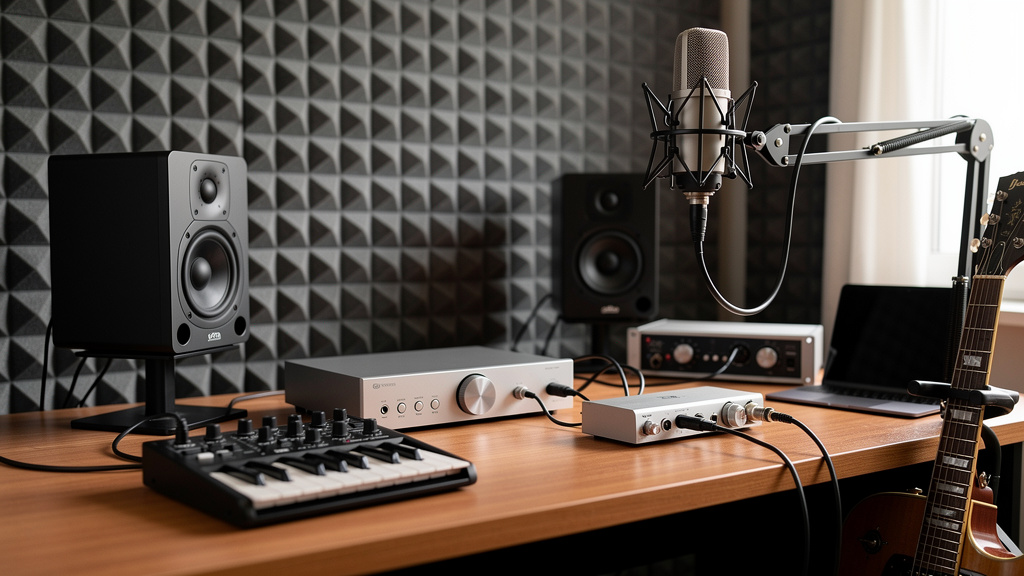
You know the session: the interface is solid, the converters are clean, the monitors are honest, and yet something about the signal path feels weaker than it should. A synth comes in a little hashy. A compressor insert adds a faint buzz. Long monitor runs somehow sound less confident when you push the room. So you buy a nicer cable, maybe one with heavy shielding and gold-plated ends, and the noise floor barely moves. That is the frustrating part: the rig is expensive enough that it should feel finished, but the wiring is still quietly stealing dynamic range.
A lot of studio noise problems that get blamed on “cheap cables” are really signal-format problems. Balanced and unbalanced lines do different jobs. XLR and TRS are not magic by themselves. Gold plating does not repair a ground mismatch. If you want a studio that stays quiet when the gain goes up, you need the cable type, wiring scheme and device I/O to agree with each other.
Here are the seven cabling mistakes I see most often when a studio sounds thinner, noisier or less stable than the gear list suggests.
1. Assuming the connector tells you whether a line is balanced
This is probably the most common misunderstanding in project studios. People see XLR and think “balanced,” then see quarter-inch and think “unbalanced.” But a connector is just a connector. XLR is almost always used for balanced analog audio, yes, but quarter-inch can be either TRS balanced or TS unbalanced. RCA is typically unbalanced. The important question is not what fits physically. It is how the source and destination are wired electrically.
A balanced line carries the signal on two conductors with opposite polarity, plus a shield. The receiving input compares those two signal legs and rejects common noise that both picked up along the way. That rejection is where the real benefit lives, especially over longer cable runs and around power supplies, displays and wall warts.
If you connect an unbalanced output to a balanced input, the system may still pass audio just fine, but you do not automatically get the noise rejection benefits of a fully balanced path. And if that cable was assembled or adapted badly, you can create level loss, odd grounding behavior or increased susceptibility to interference.
Before blaming the cable brand, verify three things:
- Whether the output is balanced or unbalanced
- Whether the input is balanced or unbalanced
- Whether the cable wiring actually matches those two devices
That single check clears up a surprising amount of mystery noise.
2. Running unbalanced signals across the room because “it still works”
Unbalanced lines are not wrong. They are just less forgiving. A short TS instrument cable from a guitar to a DI or amp is normal. A short RCA run in the right context can be perfectly fine. Problems start when unbalanced wiring gets stretched into jobs it was never meant to do.
The longer the unbalanced run, the more antenna-like it becomes. It is more likely to collect dimmer noise, computer hash, induced hum from nearby power cables, and the general junk that lives in any modern room full of electronics. Often the result is subtle at first. Not a dramatic 60 Hz disaster, just a grayer top end, a little buzz between phrases, and less usable gain before the system starts sounding stressed.
If you need to travel any real distance in a studio, balanced lines usually make life easier. Monitor feeds, outboard sends and returns, patch points between racks, and ties to another room all benefit from proper balanced wiring. If a source only offers unbalanced output, that is where conversion tools matter. A well-chosen DI, reamp box or line isolation device can turn a vulnerable run into a more robust one.
If long runs are part of your room and noise seems to appear only when gear is spread out, it is worth reading why a better power conditioner won’t silence studio hum, because many “power” complaints are really signal-path and grounding complaints wearing a different costume.
3. Using TRS everywhere without checking what the jack actually does
TRS connectors cause more accidental miswiring than they should, mostly because they are used for several completely different purposes. A quarter-inch TRS plug might carry balanced mono line level, unbalanced stereo headphone signal, insert send/return on a single jack, or something manufacturer-specific. Same plug shape, very different job.
This is where people get burned. They buy TRS cables for every quarter-inch socket on the rack and assume they have “upgraded” the studio. Then one piece of gear with unbalanced TS outputs, servo-balanced outs, impedance-balanced outs or insert points starts behaving strangely. Maybe one side drops 6 dB. Maybe hum appears only when that unit is patched. Maybe the left and right image feels off because one connection is not actually doing what you thought.
TRS is not a quality setting. It is a format that only helps when both devices expect the same format. The manual matters here, even if manuals are not anybody’s favorite reading.
4. Letting shield connections solve problems they were never meant to solve
The shield in an audio cable has a job: screening and reference. It is not a cure for bad system grounding. When the only thing tying two pieces of gear together is a shield that is also carrying unwanted current between chassis grounds, noise gets in fast. This is one reason a cable can seem “bad” in one setup and perfectly quiet in another.
Ground shield mismatches often show up when you connect equipment from different power domains, different outlet groups, or a mix of pro and consumer gear. Suddenly a cable that should be routine becomes the path for circulating current, and the audio line pays the price.
This is where expensive plating gets marketed as if it solves physics. Gold contacts can be useful for corrosion resistance in some environments, but they do not give you common-mode rejection, and they do not stop a ground loop. If the system topology is wrong, shinier metal at the tip is not the answer.
What matters more is having the right cable construction, the right interconnection method between balanced and unbalanced gear, and a layout that does not force shield current to do all the heavy lifting. If you want a structured way to think that through without getting trapped in contradictory forum advice, Kill the Noise is a strong resource because it maps the problem visually instead of treating every buzz like the same buzz.
5. Mixing consumer and pro line levels without noticing the gain penalty
Not every noise problem starts as obvious interference. Sometimes the cabling is technically passing signal, but the level relationship between devices is poor enough that you end up pushing gain later and exposing noise that should have stayed buried.
Consumer gear commonly works around -10 dBV on unbalanced RCA connections. Pro gear commonly expects +4 dBu on balanced XLR or TRS connections. Join those worlds carelessly and you can wind up with a weak send feeding an input that wants more level, followed by extra makeup gain downstream. The listener hears hiss or buzz and assumes the cable is “adding noise,” when really the system was underfed from the start.
This matters in hybrid rooms where interfaces, monitor controllers, synths, samplers, outboard and desktop devices all meet in one rack. The cable itself may be fine. The problem is that a mismatched line format quietly wrecks your operating level and leaves less headroom where you need it.
When a path feels thin, noisy or oddly easy to clip at one point and weak at another, ask whether the connection is preserving the intended level standard, not just whether sound comes through.
6. Routing audio and power together because the rack looks cleaner
Neatness is good. Parallel bundling of everything is not always good. One of the easiest ways to raise the interference risk in a studio is to run low-level audio lines tightly alongside AC power for distance. Magnetic and electric fields do not care that the cable management looks satisfying.
Balanced lines are more resistant to this than unbalanced ones, but resistance is not immunity. Mic-level runs and high-gain instrument paths are especially sensitive. If audio has to cross power, crossing at roughly a right angle is usually kinder than running side by side for several feet. Separation matters more than cable cosmetics.
A practical studio layout usually follows a few simple habits:
- Keep power distribution physically separate from audio where possible.
- Use balanced runs for anything traveling across the room or between racks.
- Keep unbalanced instrument and consumer-level runs short.
- Group cables by function instead of lashing every type together.
That does not make for dramatic marketing copy, but it does make for a quieter room.
7. Treating “premium cable” as a substitute for signal-path planning
This is the big myth underneath all the others. Cable quality matters, but mostly in the boring ways: decent construction, proper shielding, reliable strain relief, accurate termination, and consistency from cable to cable. Once those basics are covered, the leap from a competent cable to a luxury cable rarely solves the noise issue people are actually hearing.
If your signal path is balanced end to end where it should be, your unbalanced runs are short where they must exist, your line levels make sense, and your grounding is sane, ordinary professional cables can deliver excellent results. If those fundamentals are wrong, premium branding will not restore the headroom and rejection you lost upstream.
This is also why two studios with the same interface can behave completely differently. One has robust interconnections and clear signal format choices. The other has adapters stacked on adapters, consumer outputs feeding pro inputs across long runs, and one problem cable being asked to bridge an electrical mismatch. Same converter quality, very different outcome.
What a quieter, stronger path actually looks like
The good news is that this category of problem is usually fixable once you stop treating all cables as interchangeable. Stronger signal paths are built from compatibility first: balanced where it matters, unbalanced only where appropriate, short vulnerable runs, sensible grounding, and no mythology about connector plating doing the work of system design.
If your mixes feel thinner than they should, or the rig gets noisier every time you add one more piece of hardware, the answer is often hiding in plain sight between the boxes. Not glamorous. Just foundational. And in a studio, foundational is what gives you back the dynamic range you already paid for.
Comments (0)
Leave a Comment
No comments yet. Be the first to comment!